Get

In Your Inbox

Catster is reader-supported. When you buy via links on our site, we may earn an affiliate commission at no cost to you. Learn more.

Is Cat Panting Normal? Our Vet Explains

Share

cat-pixabay

We are all familiar with the sight of a happy hound, tail wagging and tongue lolling, panting to cool down on a hot day or after a run. But what if we find our cat panting with his mouth open? Is that ever normal or should we be worried? The answer is no, it is not normal for cats to pant. Let’s take a closer look!

divider 1 paws

Is It Okay for Cats to Pant?

The answer is a qualified “No”. Panting is a word that describes open-mouthed, rapid, or heavy breathing. It is never ‘normal’ for a cat to pant and cats are not physically designed to mouth-breathe for long periods.

In a healthy cat, panting after exercise should only occur after unusual exertion, and then only for a short time.  Cats may occasionally pant in very stressful situations and may do so if confined in hot conditions – but if nothing about the circumstances offers an explanation, then something may indeed be wrong.

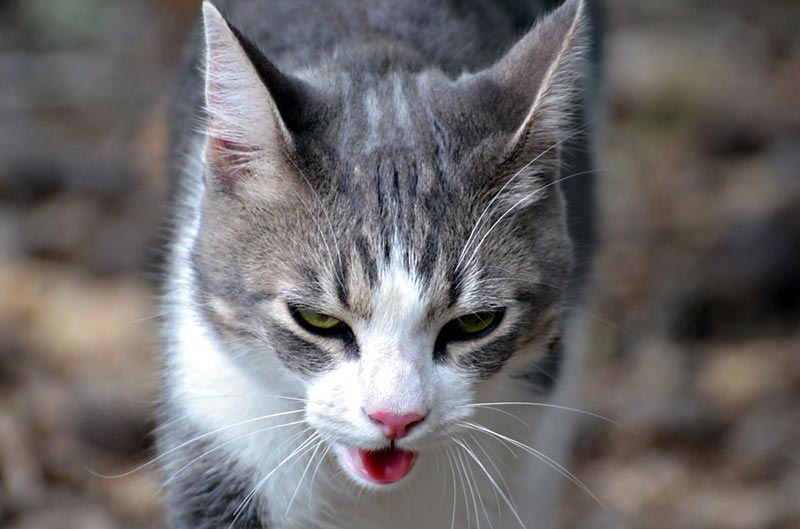
cat walking outdoor and panting
Image By: SUSAN LEGGETT, Shutterstock

Should I Be Worried if My Cat Is Panting?

To gauge how worried you should be, consider the situation around you and what you know of recent events. Read the sections on stress and on heatstroke below to rule these out – note that cats with heatstroke will need veterinary care.

It’s a good idea to ask yourself if you have noticed other changes in your furry friend. Review recent weeks or months to see if you can appreciate weight loss, greater thirst, altered breathing, or any other difference. This can give you – and a vet – clues to an underlying problem.

If you need to speak with a vet but can't get to one, head over to PangoVet. It's an online service where you can talk to a vet online and get the advice you need for your pet — all at an affordable price!

PangoVet_Mention-in-Content for PangoVet2 save money

divider 1 paws

Is Panting a Sign of Stress or Pain in Cats?

Let’s face it, we envy them: snoozing and lazing for most of the day, never seen working on their keep-fit regime, yet able at a moment’s notice to take to their heels or leap effortlessly onto a high perch. Stress panting is rare and most healthy cats can cope with sudden exertion or stress with no signs at all.

If you do see your cat chased across the yard with a barking hound dog at his heels, or find him hemmed in and unable to move to a safe place, threatened by people, noise, or other pets, then extreme stress may have caused him to pant. Even so, he needs to be carefully watched, and it’s worth reading on to consider the underlying problems that might be brewing.

Pain alone would rarely make a cat pant, unless sudden and severe, such as a road traffic accident. Even then, panting would suggest more than just bruising. Long-term painful conditions, such as arthritis, often go unrecognized for months or years because cats hide their pain so well, simply becoming subtly less springy and less interactive.
Is Panting a Sign of Heatstroke in Cats?

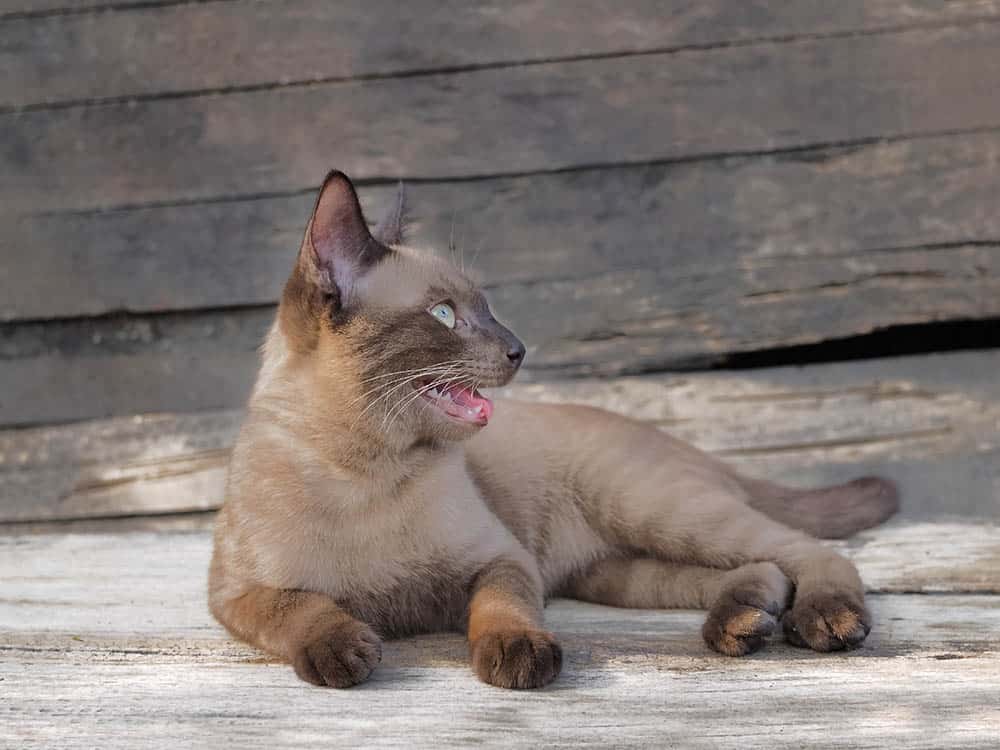
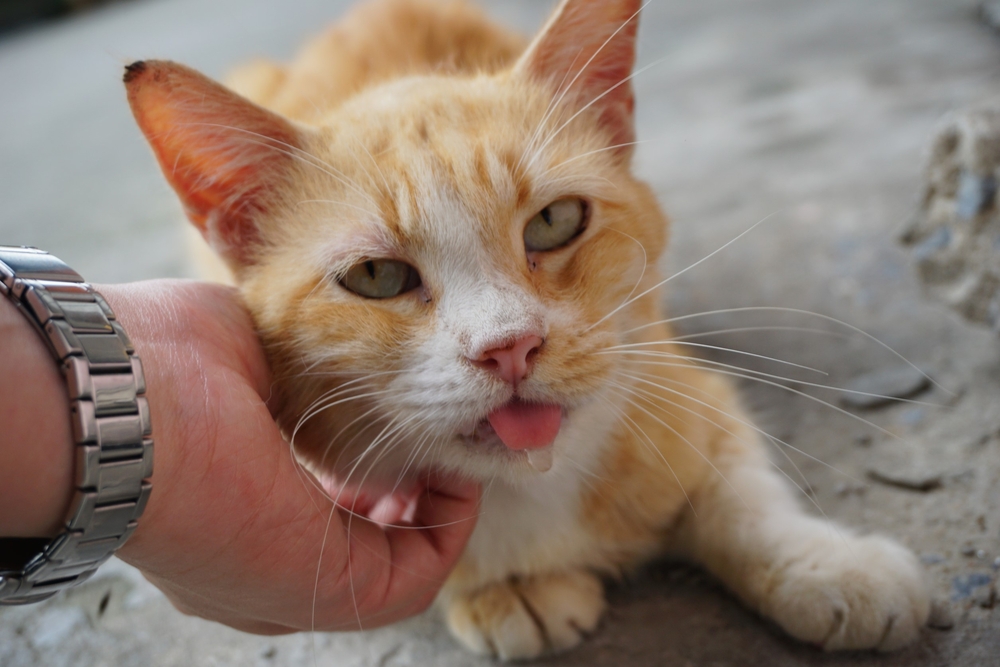
Open-mouthed panting and drooling can be signs of heatstroke. Although originally a desert animal, evolving to cope in conditions of high, dry heat and limited water supplies, cats can still get heatstroke. If they are trapped in a car, conservatory, or outhouse, with insufficient shade or ventilation, it’s a possibility.

Overheating is more likely if the cat hasn’t had access to water. It’s also more likely in the elderly and the very young, in dense-coated and long-haired breeds, and the flat-faced breeds such as Persians and Exotic Shorthairs.

Panting may be an obvious finding, but cats may also be restless, staggering or confused, have vomiting or diarrhea, and at worse, may collapse or have seizures.divider 1 paws

What Should I Do if My Cat Is Panting?

Remember that, unfortunately, some of the conditions that can cause a cat to pant are serious.

It’s best to err on the safe side, so first of all, before you try to figure out what may have happened, do the following:
  • Be quiet, calm, and gentle, keeping stresses to a minimum – your cat may be very fragile.
  • Close off any open windows and doors to keep your cat in while you watch, read, and think about what to do.
  • If you have found your cat confined to a hot place and think he may have heatstroke, move him to a cool area.
  • Access the number for a veterinary clinic.
  • Offer fresh, cool water to drink – but don’t try to force water down.
  • If heatstroke is likely, gently damp the coat with tepid – not cold – water, or place thin, wet towels over him. Place a fan nearby. Seek veterinary advice if you are unsure about doing this, but studies show that home-care before heading to the clinic can improve the outcome. Get your air conditioner running in the car if possible.
  • If it feels safe to watch and wait, read all the sections here and consider whether you’ve seen other changes in your pet – if in doubt, seek veterinary advice.

Why Is My Cat Panting?

We’ve looked at how normal cats in abnormal situations – of heat, stress, or fear – might pant for a short while.

Let’s look at some diseases where abnormal panting is seen, flagging up the need for veterinary care:
  • Asthma and bronchitis syndrome

This causes episodes of rapid breathing and wheezing. Often confused with hairball retching, the hunched posture, elbows out, and head stretched forward, with a choking wheeze, finishing in a retch and swallow is suggestive.

  • Heartworm and other parasites

Parasites affecting the heart or lungs can cause a cough or breathlessness. This is more commonly a problem in cats that go outdoors and in southern and midwestern U.S. states; heartworm prevention is recommended.

  • Hyperthyroidism

Cats with an overactive thyroid may gradually lose weight, have diarrhea, drink more, become more vocal, look unkempt, and develop secondary heart problems and hypertension.

  • Heart disease:

Often surprisingly difficult to spot till well-advanced – coughing is uncommon – heart disease in its later stages can cause rapid, strained, or open-mouthed breathing, as well as collapse or cold extremities.

When Should I Take My Cat to the Vet for Panting?

Remember, a healthy cat shouldn’t pant, so it’s best to consider a vet visit unless you’re confident that his panting can be explained by stress or over-exertion. Even then, it’s possible he has underlying disease and you should consider a vet visit.

It’s wise to have him checked over. If panting is persistent, treat this as urgent:
  • Call a veterinary clinic and let them know his symptoms – they’ll want to prepare for your visit.
  • Start cooling the car if need be and be gentle when moving him into a carrier.
  • Be prepared for your cat to be admitted; he may need oxygen, observation, and diagnostic tests. Give some thought to what level of care you will want and what guidance you’ll give as to your budget.
divider 1 paws

Conclusion

Panting in cats is generally considered abnormal and can be a sign of severe hidden illnesses. In general, it’s best to take your cat to the vet if he’s panting. Cats are excellent at hiding the signs of disease and it’s best to arrange for your vet to examine your cat as soon as possible.

Want more free vet advice? Check out some of our other Ask-a-Vet posts:


Featured Image By: Ihtar, Pixabay

Want content like this delivered to you?

Sign Up For Our Newsletter

News, insights, expert advice, and everything cat

* By submitting, you agree to our Terms & Conditions and Privacy & Cookies Policy.


How useful was this post?

Click on a star to rate (you can leave written feedback after clicking submit)

Help us improve Catster for pet parents!

Your feedback really matters.

What did you like about this post? Also how can we improve it?

Join the conversation

Leave a Reply

You’re very welcome to leave a comment or question. Please know that all comments must meet our community guidelines, and your email address will NOT be published. Let’s have a positive and constructive conversation.


Talk With A Vet Online

Peace of mind,
anywhere, anytime

Affordable vet advice

Ask Dr. Paola – Help! My Cat Has Stopped Eat His Wet Food! (June 1, 2026)

Welcome to our “Ask Dr. Paola” series, where every Monday we bring expert advice straight from Dr. Paola Cuevas (MVZ) to help our...

Chatting About Fake News in the Pet World, AI Again, and New Age Journalism | Chatty Cattys, Episode 23

Navigating the modern digital landscape requires a sharp eye to distinguish fact from fiction. In this episode of Catster’s podcast, Chatty Cattys, Nicole...

The Surprisingly Sweet Reason Behind Cats Chewing Human Hair (and Others)

Cats have a talent for turning the ordinary into something slightly bizarre. One minute, there’s a peaceful evening on the couch, and the...

Could This 19th-Century Technology Save Raw Pet Food? How E-Beams Are Changing the Industry

One of the most important developments in the pet food industry over the last century was the ability to create meals that were...

More related

Chylothorax in Cats: Causes, Signs & Care Guide (Vet Answer)

Chylothorax means the presence of chyle in the chest. This is a medical condition that occurs when chyle accumulates in the chest cavity...

How to Teach a Cat to Fetch: 8 Vet-Reviewed Steps

Fetch isn’t just for dogs—some cats love it too! While teaching a cat to fetch might take some work, once your cat gets...

6 DIY Fun Fleece Toys for Cats To Make At Home Today

Many cats love fleece. It’s also very easy to work with, making it a great option for new DIYers. There are many ways...

Persian Kittens For Sale in Virginia: Breeders List 2026

Catster advocates for adopting before shopping, though we fully understand there are many reasons for seeking a breeder. So, we encourage it to...

Keep reading

How Much Are Kitten Shots at PetSmart? Typical Cost & FAQ

Cats require vaccinations throughout their lives, but the most important ones are given when they’re kittens. This is a critical time in which kittens need to build up immunity, but those frequent shots can add up financially. Fortunately, you can...

vet giving kitten vaccine

Can Cats Eat Beef? Vet-Reviewed Nutrition Facts & FAQ

Cats need animal protein to meet their nutritional requirements. So, can cats have beef? Although cats would not hunt and eat cows in the wild, beef is considered a good protein source for cats. In general, cats need high amounts...

Can Cats Eat Beef

Your Cat Is Begging at Christmas Dinner – Here’s What’s Safe to Share

Your family is gathering around the Christmas table, passing dishes and laughing, when you feel it: those unblinking eyes burning into the side of your face. You glance down. There’s your cat, sitting perfectly still, radiating an intensity that suggests...

Bengal cat head peeks out from behind a table with Christmas cookies on a plate

How to Keep My Cat from Using the Dog Door: 10 Vet-Verified Tips & Tricks

Cats are curious creatures, and they can become attracted to using the dog door for various reasons, such as exploring new areas, following their canine siblings, or seeking an escape route. However, allowing your cat to use the dog door...

cat looking curiously on the pet door

Why Does My Cat’s Tail Twitch? 6 Vet-Reviewed Reasons

Cat ownership would be a lot easier if our pets could tell us their thoughts. However, until someone develops a cat-to-human translator, we have to use context clues and our pet’s body language to decipher their moods. A cat’s tail...

A-curled-cats-tail-close-up

Can Cats Eat Takis? Vet-Reviewed Precautions & Health Guidelines

Did you know that cats only have 473 taste buds1? Humans have about 9,000 taste buds. This means that a cat lacks a lot of flavor sensors, mainly sweet and also spicy. These flavors simply don’t register the same as...

Can Cats Eat Takis

Can Cats Eat Capers? Vet-Reviewed Facts & FAQ

Capers are known for adding a certain “pizazz” to many meals including pasta, salads, fish, and bagels. These small and savory flower buds have been around since the mid-17th century and have become a mainstay ingredient in many Italian dishes....

Can Cats Eat Capers

Is Basil Safe for Cats? Vet-Verified Nutritional Facts & Safety Guide

Basil (Ocimum basilicum), also known as sweet basil, is a member of the mint family. It is native to India but grown across the world, especially as a culinary herb. It is used heavily in Italian cooking and is the...

Catster_Is Basil Safe for Cats

Love Cats? So Do We! Join the Catster Community

Stay informed with expert pet care insights delivered straight to your inbox! Discover professional guidance on animal behavior, feeding tips, trusted product picks, and much more.


Sign up for the Catster Email Newsletter

Stay informed with expert pet care insights delivered straight to your inbox! Discover professional guidance on animal behavior, feeding tips, trusted product picks, and much more.