Lykoi Cat Breed (Wolf Cat): Pictures, Info, Care Guide & More

In this article
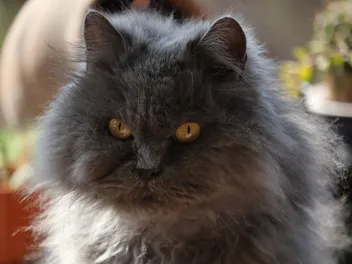
The Lykoi, otherwise known as the "werewolf cat" for obvious reasons, might be one of the most interestingly horror-like cat breeds in existence. It's also one of the newest, making its debut roughly 20 years ago. What started as a genetic mutation has become a sought-after look, captivating people with their unique, cryptozoological charm.
Breed Overview
Height:
Weight:
Lifespan:
Colors:
Suitable for:
Temperament:
If you're scouting the web trying to find some information on this remarkable breed, look no further. Learn all the ins and outs of the Lykoi to see if one might just be the newest addition to your family.
Lykoi Characteristics

Temperament & Intelligence of the Lykoi 🧠

Lykoi cats are descendants of feral cats, and those genes remain strong. These cats are exceptional hunters and have excellent survival instincts. They don't make the best lap cats because of their ancestry—they prefer to keep moving instead.
While they may look messy and unkempt, the Lykoi is anything but feral these days. They have wonderful personalities, bonding incredibly well with their people. They are the epitome of curious, melding the typical cat stereotypes. This quality makes them both trainable and entertaining.
Lykoi cats will be no stranger to play, chasing around jingling toys or climbing to new heights, whether on countertops or cabinets. Because they are inquisitive, they love to seek unfamiliar territory and snoop around to find new and exciting things in the home.
Lykoi cats have an outstanding balance between friendliness and independence. You might find them coming up to you and demanding love. But equally, they will go off to themselves, enjoying their own freedom.
These cats are brilliant, amiable, and pleasant to be around. But they may be very strong-willed busy-bodies who don't often stop to smell the roses. If that balance is something that works for your situation, they will likely mix in quite nicely.
Are These Cats Good for Families? 👪
Lykoi cats fit in very well with families of all types, especially when they're socialized early. Some can be a bit more reserved, particularly around strangers. They can take a bit to warm up to new people and household changes. If you plan on introducing them to children, make sure to do it early on, even if you don't have any of your own. Letting them experience what it's like to be around little ones will help them better adapt when you bring home your baby from the hospital or have nieces or nephews come to stay. Which could be more often if you now have a werewolf cat in your home
Lykoi cats shouldn't ever be left outside for several reasons. Because of their patchy coats, they don't do so well in temperatures that are too hot or cold. Also, because they are extremely curious—and as the old saying goes—curiosity killed the cat. They might venture off and get lost, or worse. So, even though you might take them out on a leash for monitored outdoor visits or let them sit on a screened-in porch, they shouldn't ever be outside alone.
These cats would make terrific companions for apartment dwellers and homeowners alike. They don't require much space, just a lot of stimulation. As long as you're properly catering to their mental needs, having a large space isn't much of a factor.

Does This Breed Get Along With Other Pets? 🐶 😽
Even with a name like “werewolf cat”, Lykoi cats can acclimate very well to other household pets, especially as kittens. But introductions need to happen slowly. Since they can be a bit wary of sudden changes, bringing home a hyper puppy or another overbearing pet can be quite a challenge for them.
The best way to ease them into multi-pet households is to do so very early so they can grow into the situation. If you plan to bring home a pet long after you have your Lykoi, you need to socialize them with caution and respect. If introductions are slow, your Lykoi will warm up in no time.
Lykoi are insanely good hunters, which is something instinctual for most felines. You should always make sure you separate any cage animals so that your Lykoi doesn't take advantage of the situation.
It isn't uncommon for your cat to obsess over the hamster in a cage or the goldfish on the nightstand. Offer protection to your prey animals, making sure to keep them at a safe distance. Even if your Lykoi doesn't seem to show interest, supervision is always necessary to ensure the safety of all your furry, feathery, or scaly friends.

Things to Know When Owning a Lykoi (Wolf Cat)
Food & Diet Requirements 🐡

There is some controversy on wet versus dry food for cats. Regardless of your chosen method, the most crucial part of your cat's diet is protein. All felines are strict carnivores, so essentially, that means the higher the protein, the better.
Different life stages require certain levels of nutrition. At the very minimum, your Lykoi cat needs 35% protein as an adult. Lykoi kittens require even more, along with other vital ingredients to feed their growing muscles, bones, skin, and coat.
Some claims say that wet food contributes to tooth decay and obesity. Other claims say dry kibble doesn't give your cat the appropriate moisture in their diet. A great way to combat and level out both issues is to combine the dishes for one well-rounded diet.
You can also try out a few homemade recipes. The web is crawling with ideas on cat food you can make at home. Do be careful to do your research and consult with a vet before offering them a homemade dish. You want to be sure to cover all essentials in your recipe, so your cat doesn't lack vital nutrients.
Exercise 🐈
Lykoi cats are fairly energetic cats, so you won't have to persuade them to play. They will have a ball with you chasing strings, jingly toys, and feathers. They might also enjoy playing with other household pets and children.
To keep your Lykoi healthy, they should get roughly 15 to 20 minutes of exercise per day.
After your Lykoi is spayed or neutered—or as they age—their activity level may decrease. Always be sure to offer lots of activities for them, so they don't become lazy or inactive.

Training 🧶
Since these cats are highly independent, they don’t make outstanding candidates for training. But because they have a mind of their own, many things have to be on their terms. If they exhibit destructive behaviors like scratching furniture or climbing on countertops, you might have to get creative to stop them.
As Lykoi kittens, they should use the bathroom in their box after the first few introductions. You might have to initially restrict their space to one room and then slowly let them explore the rest of the household to avoid accidents.
Teaching your cat to stay off of counters and out of houseplants might prove to be a challenge, especially if they have other plans. Patience and consistency are key.
Grooming ✂️
Lykoi cats are semi-hairless, with fur that grows in patches. It's one of the coolest things about their looks, but that can also be misleading since you might believe they don't shed as much as a traditional house cat.
Don't be fooled! Lykois shed just as much as other cats, and sometimes even more. These cats are very prone to seasonal hair loss and can sometimes even have bald patches. Since their coat situation is a unique one, you have to learn special care early on.
Lykoi cats benefit from weekly brushing. They have very sensitive skin, so you have to be careful when you use any tools. Irritation is common, so brush with care.

Health and Conditions 🏥
Lykoi cats have a lot of health variables that might not be fully worked out quite yet. Because the breed is still so novel, health issues might pop up more as the breed ages. Still, certain genetic issues may develop.
The only definite issue that shows up in the Lykoi specifically is skin conditions. Other ailments may come into the limelight in upcoming years, so make sure to report any changes or oddities in health to your veterinarian.
More information will be recorded in the future to give an extensive overview of ailment possibilities.
Male vs. Female
Males tend to be larger than females, as with most cat breeds. Females generally weigh between 6 and 9 pounds, whereas males weigh 10 to 13 pounds.
When it comes to personality, there might be differences between the male and female Lykoi, but it's not always the case. Males tend to be more affectionate with a broader audience. They might also be more active and playful. Their energy can be a bit more scattered and they easily get distracted.
Females are more attentive to detail, and such can make them better hunters. Females might also be a little more selective about who they choose to bond with. You might find that they are a bit moodier or particular about who they want to be around or what they want to do.
While these may be stereotypical traits, each cat will act according to their singular characteristics.
3 Little-Known Facts About the Lykoi
1. Lykoi Literally Translates to "Wolf" in Greek
The name Lykoi comes from the Greek word "lykos," which translates to "wolf." So, their name quite literally pins their overall werewolf cat look.
2. Lykoi Cats Actually Come From Feral Cats With Skin Problems
You might come across a Lykoi naturally. If you're passing a feral cat, you might cringe, wondering what kind of mangy thing you're looking at. But in all reality, the Lykoi came from developing the patchy look of feral cats to create a specialized look.
3. Lykoi Cats Have a Hairless Gene All Their Own
Most hairless or semi-hairless cat breeds have a Sphynx or Devon gene, but Lykoi have a different gene that is particular to their breed.
Final Thoughts
Lykoi will likely rise in popularity in the coming years. These spooky Halloween-style cats are bound to steal the hearts of werewolf lovers across the globe. Since they aren't aloof or standoffish as their looks might imply, they match well to most lifestyles, especially as kittens. The Lykoi cat price might deter some, but if you have your sites set on this breed, remember to buy from a reputable breeder who can validate the kitten's care. In any regard, love your little werewolf cat and pick a spooktacular name for them!
Feature Image Credit: Nynke van Holten
Expert cat care, straight to your inbox
News, insights, and useful advice, delivered to you.

No spam — unsubscribe anytime.
By signing up, you agree to our Terms & Conditions and Privacy & Cookies Policy.
How useful was this post?
Click a star to rate. You can leave written feedback afterwards. (We read all feedback.)

Rachel Giordano is a Pensacola, Florida-based musician and writer. She lives with her partner and their two dogs, Sophie, a Boston Terrier, and Aero, a Border Collie/Sheltie mix. Rachel holds a Bachelor of Arts degree in communication and loves writing about all types of cat breeds. When she’s not writing about cats, she loves to write suspense/thriller novels. A musician by night and writer by day, she enjoys sharing her knowledge of the needs and requirements of our furry friends.