Get

In Your Inbox

Catster is reader-supported. When you buy via links on our site, we may earn an affiliate commission at no cost to you. Learn more.

Why Do Cats Fight? 8 Vet-Verified Reasons & How to Stop the Fighting


Share

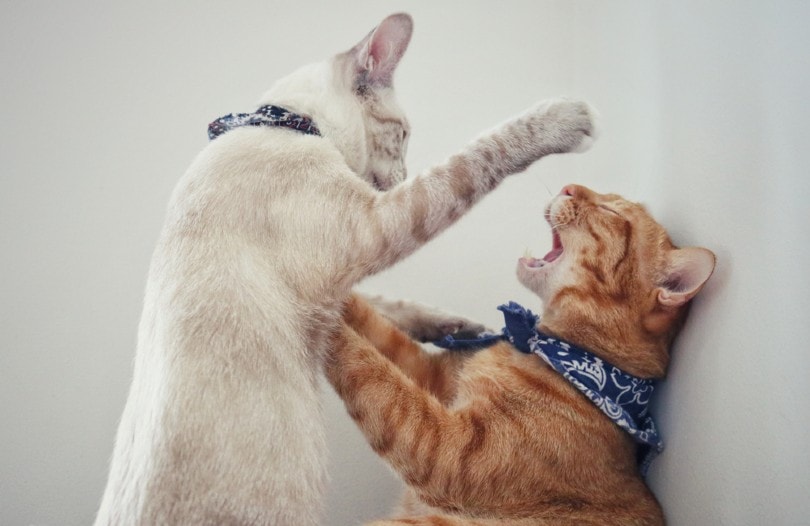
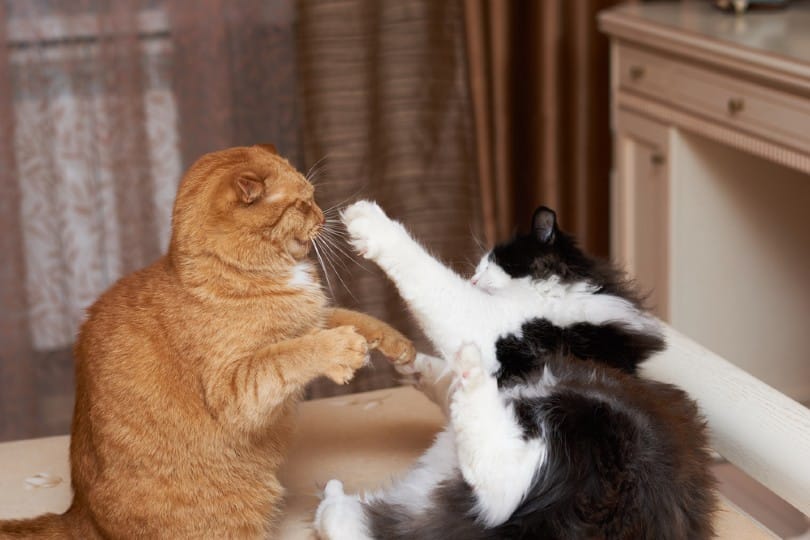
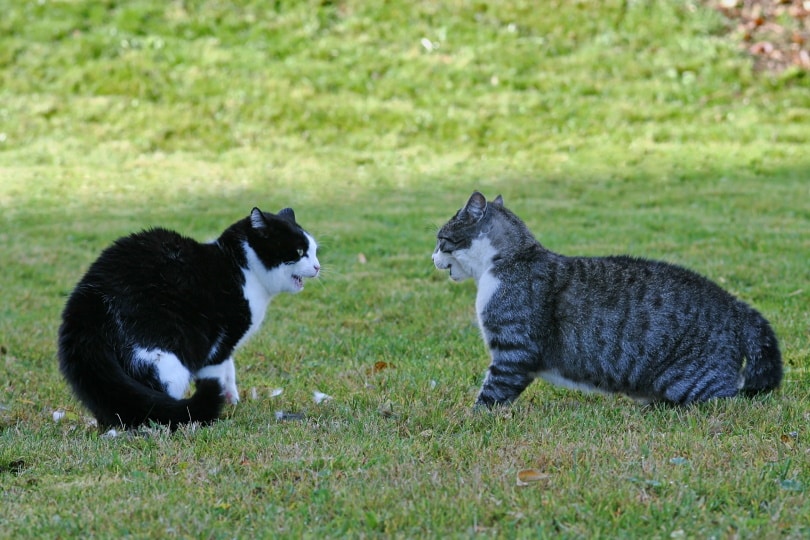
two cats fighting

If you live in a multi-cat household, you may be familiar with spats among your feline friends. Referred to as inter-cat aggression, cat fights are stressful to pet parents and potentially harmful to the cats.

In this article, we explore the different reasons behind cat conflicts and ways to put an end to the bad behavior once and for all.

divider 3 paws

The 8 Reasons Why Cats Fight

1. Inter-male Aggression

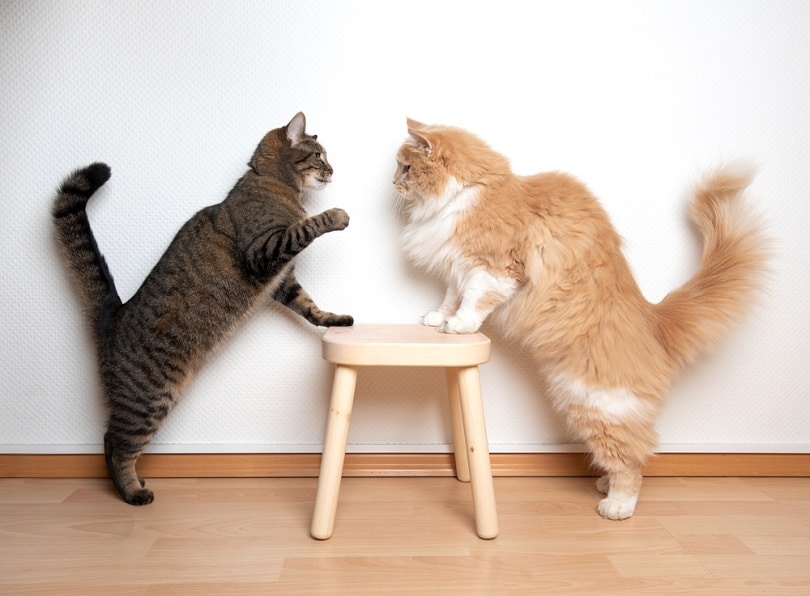
Do you own more than one adult male cat? They may be battling it out for a number of reasons. Typically, intact male cats will get into fights. This behavior is usually related to reproduction if there’s a female feline in the area. Ninety percent of inter-cat aggression can be prevented by neutering or spaying your pets.

two aggressive cats
Image By: Pixabay

2. Defensive Aggression

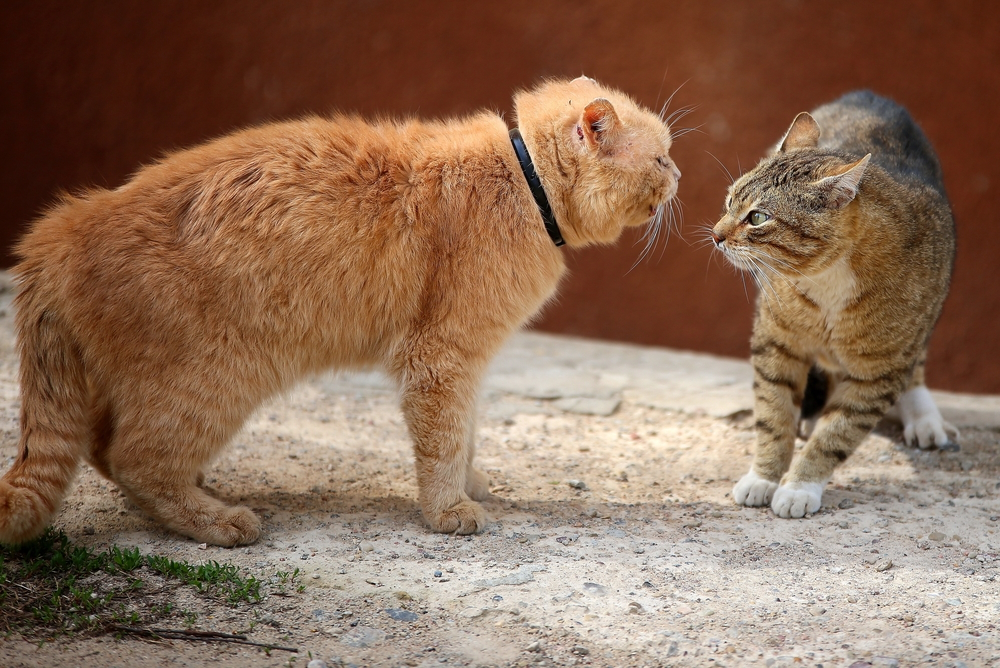
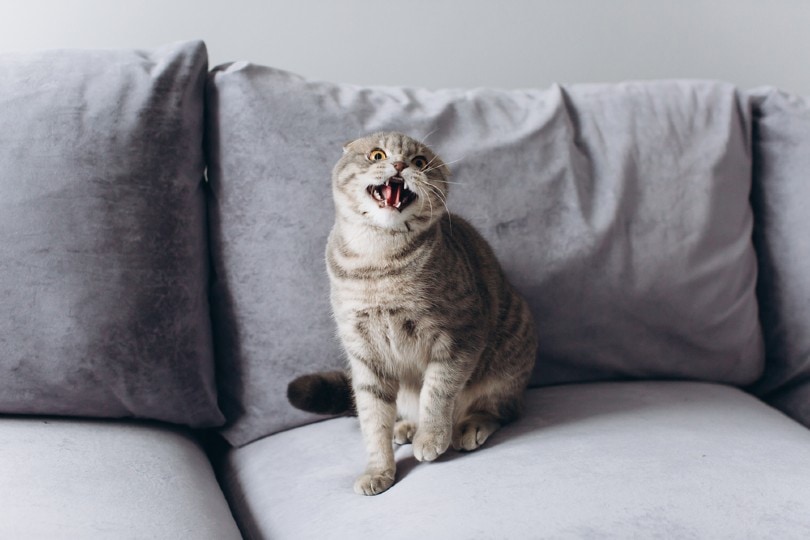
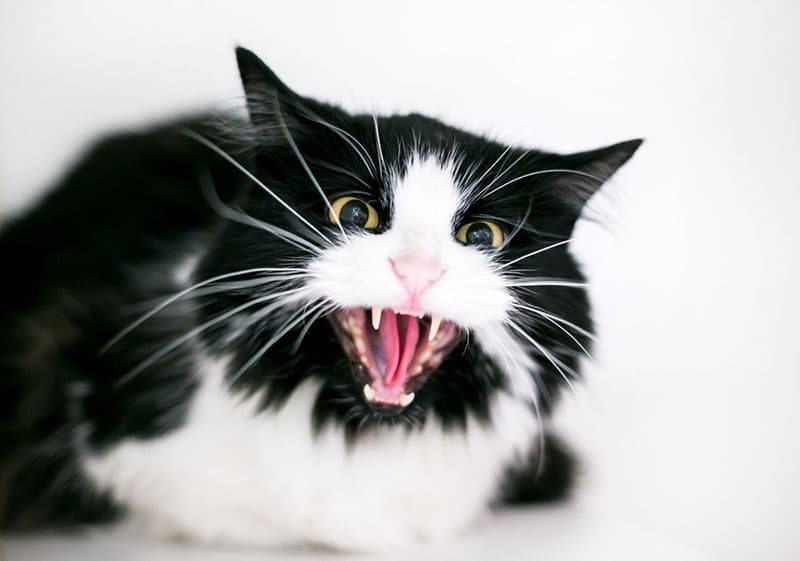
If your cat feels threatened, they’ll try to protect themselves with defensive tactics. If your kitty has flattened ears, they’ve rolled slightly to the side, or they are crouched with their tail and legs pulled underneath their body, these are usually signs that they are feeling scared. Trying to approach a cat in this posture will encourage an attack.


3. Territory

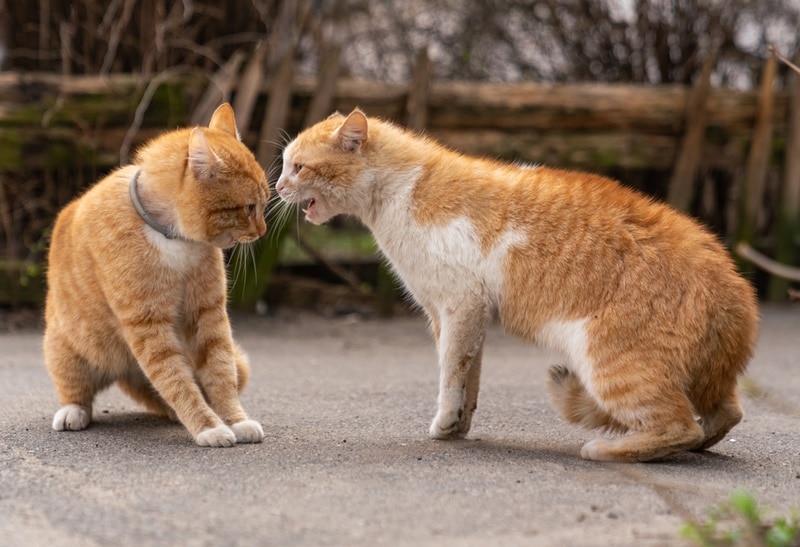
In the wild, felines will protect their territory from outsiders. It is common for a housecat to attack another kitty if they feel that they are intruding on their space.

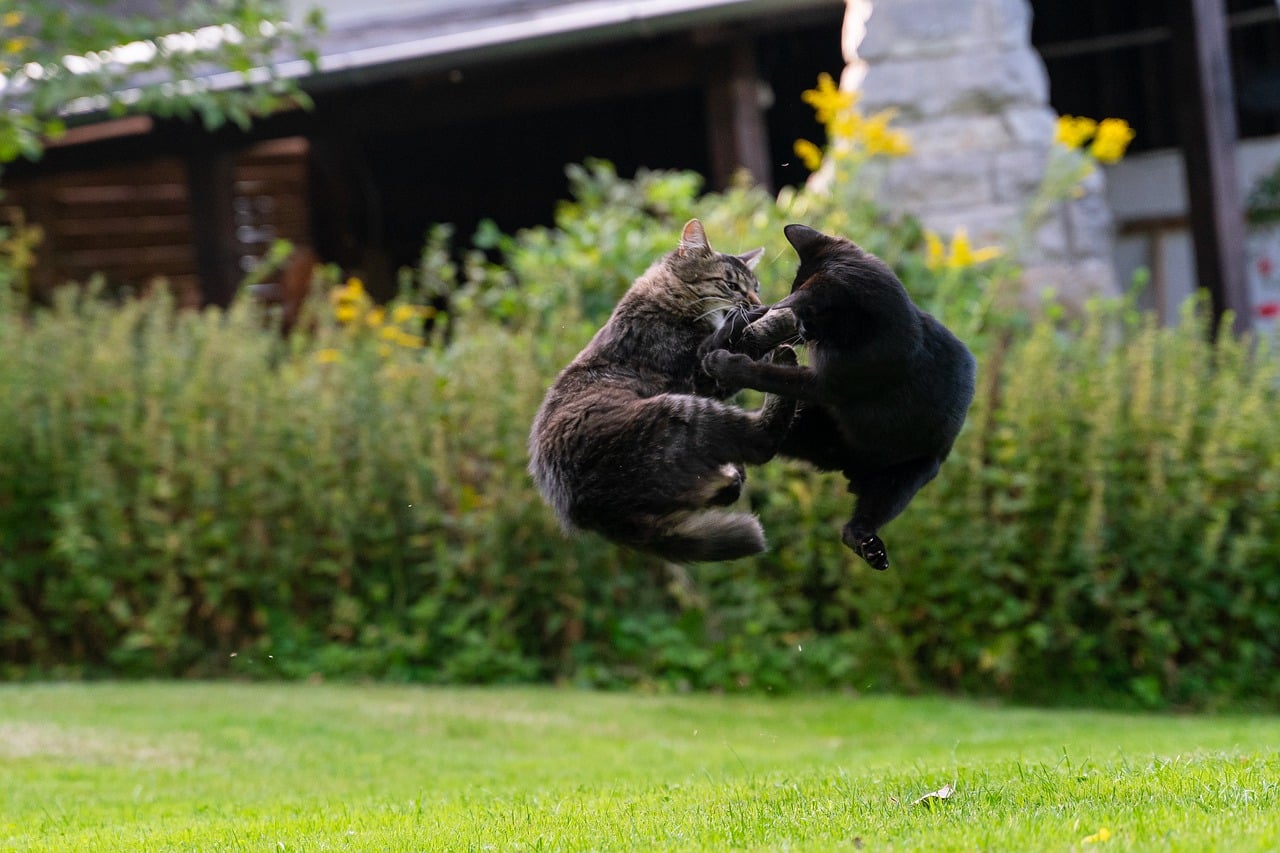
two black cats fighting
Image By: Pixabay

4. Agonistic Relationships

Do you have many cats in your home? Your kitties may be ganging up on the lowest-ranking cat in the group, typically an infirm kitten or an elderly cat. If the bullied pet is acting like a victim by displaying submissive body language or hiding, they’re only encouraging the bullying. Be aware that cat relationships are complex, and while they do not have a linear or interdependent hierarchy, some cats get along better than others.


5. Redirected Aggression

A cat may direct aggression toward another pet or you, even if nobody touched them. For instance, your kitty may be sitting in the window and witness another cat in the yard. They’ll suddenly become extremely agitated because the stranger is intruding on their territory. If you go to pet the upset animal, they may bite you because they’re so worked up by the cat outside. The same thing could happen to another cat in your household, resulting in an unexpected cat fight.

two cats sitting on the windowsill and looking outside
Image By: VICUSCHKA, Shutterstock

6. Playing Rough

Play between cats can sometimes get rough. Sometimes the playing can escalate into a full-fledged fight. If this happens, separate the two cats immediately.


7. Environmental Changes

A change in scenery can cause a cat to get stressed. If you’ve moved houses or simply moved the litter box to another room, the cats can get upset and fight. A change in routine can also cause your pets to take it out on each other.

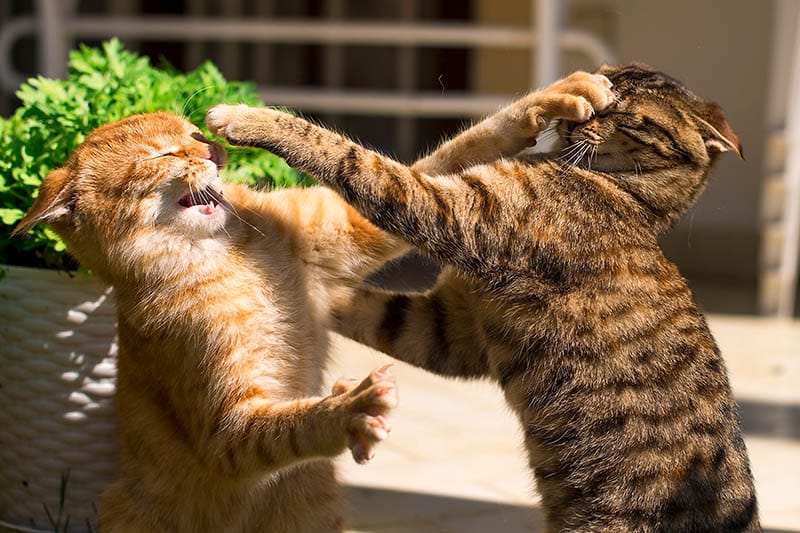
two bengal kittens fighting by the windowsill
Image Credit: Smile19, Shutterstock

8. Social Maturity

If your cat is between 2 and 4 years old, they may be challenging other cats in the household for ranking status. This could lead to a fight.

divider 3 paws

How to Stop Cats From Fighting

If your felines are fighting, never count on them to work things out. While your first instinct may be to try to jump in and separate the pair, you may get scratched or bitten in the process.

To break up a cat fight, try distracting the felines. Make a loud noise, such as the sudden hiss from a compressed air can, though this should not be directed at them. The idea is only to get their attention because once their focus is averted, they’re likely to stop fighting. Then, move the cats into different areas for a while. Reintroduce them only gradually and slowly, ensuring that each cat has enough space and resources. For example, each should have a plate with food at the opposite ends of a room.

If needed, keep the cats in different rooms most of the day, and then switch them between the rooms so they can both smell each other. Feed them simultaneously at opposite ends of a neutral territory. If the cats remain peaceful, you can gradually cut down the distance and increase their interaction times. Never forget to reinforce positive and peaceful interactions between your cats.

If your cats keep fighting, you may want a more permanent solution. Seek the advice of a vet or an animal behaviorist. You can also use pheromones to reduce stress, set up multiple feeding stations, and add more territorial space to prevent your kitties from having to share cat trees, beds, and hiding areas.

If you need to speak with a vet but can't get to one, head over to PangoVet. It's an online service where you can talk to a vet online and get the advice you need for your pet — all at an affordable price!

PangoVet_Mention-in-Content for PangoVet2 save money

divider 3 paws

Final Thoughts

Cats fight for a number of reasons. From protecting their territory to bullying a low-ranking feline, kitties can get into physical altercations. It’s important to break up the fight as soon as possible to avoid any injuries. Try distracting them but without risking getting injured while you separate them.

The best way to prevent cat fights is to get your pets fixed. Calming pheromones and additional territorial space also work.

Using these techniques will help you and all of your cats to coexist peacefully.


Featured Image Credit: Pixabay

Want content like this delivered to you?

Sign Up For Our Newsletter

News, insights, expert advice, and everything cat

* By submitting, you agree to our Terms & Conditions and Privacy & Cookies Policy.


How useful was this post?

Click on a star to rate (you can leave written feedback after clicking submit)

Help us improve Catster for pet parents!

Your feedback really matters.

What did you like about this post? Also how can we improve it?

Join the conversation

Leave a Reply

You’re very welcome to leave a comment or question. Please know that all comments must meet our community guidelines, and your email address will NOT be published. Let’s have a positive and constructive conversation.


Talk With A Vet Online

Peace of mind,
anywhere, anytime

Affordable vet advice

Why Your Cat’s Poop Smells Like a Biohazard

Nobody enjoys litter box duty, but sometimes it gets unbearable. The smell hits you from across the room. You’re scooping faster, lighting candles,...

RIP Your Furniture? Not With This Guide to Cat Scratch Damage Control

Your couch looks like it survived a minor apocalypse. The curtains have mysterious vertical shreds. That new rug you splurged on is already...

Celebrating 15 Years as the Most Popular Resident of No. 10 Downing Street

For almost 300 years, a rather unassuming Georgian building of black bricks with a shiny black door has been the official residence and...

Ask Dr. Paola – Help! My Kitten Pukes After She Eats! (March 2, 2026)

Welcome to our “Ask Dr. Paola” series, where every Monday we bring expert advice straight from Dr. Paola Cuevas (MVZ) to help our...

More related

How to Stop a Cat From Licking Everything: Our Vet Discusses Reasons, Remedies & FAQ

You know that cats groom themselves, so you’re not surprised to see your kitty licking until you realize they’re constantly licking things. Is...

How to Keep Slugs Away From Cat Food: 7 Vet-Approved Tips

If your cat has regular access to the outdoors and likes to hang out in your backyard enjoying the sunshine, you may have...

The 34 Most Popular Cats on the Internet in 2026

According to The International Cat Association (TICA), there are 73 recognized cat breeds (pedigree and hybrid), and Cat Fanciers’ Association (CFA) recognizes 45...

How High Can a House Cat Jump? Highest & Average Jumps

Some cats are impressive athletes, while others prefer a leisurely nap that takes up most of the day. But most cats have impressive...

Keep reading

Why Do Cats Like to Be Petted? 4 Vet-Reviewed Reasons for This Behavior

The personalities of cats can vary widely, but one thing that they all enjoy is being petted. Some cats will happily accept a tickle under the chin from everyone, while other cats won’t approach anyone other than their very favorite...

a woman's hands petting a cat

How to Save a Cat From Choking: Can I Do the Heimlich Maneuver? Vet-Reviewed Guide

True choking occurs when something is stuck at the very back of the throat, which leads to the windpipe being obstructed. This often occurs when the animal doesn’t chew thoroughly or eats something that they shouldn’t. Fortunately, cats are quite...

cat cough

Can Cats Eat Grapefruit? Vet Approved Health Guide & FAQ

Cats can safely eat a variety of fruits as occasional treats but, unfortunately, grapefruit is not one of them. Cats should never eat grapefruit because most parts of this fruit are toxic and even the flesh can upset their stomachs....

Can Cats Eat Grapefruit

How to Introduce a Cat to a New Litter Box (7 Vet-Approved Tips)

There are several possible reasons you might need to switch up your cat’s litter box. Perhaps they have outgrown their present one, are having difficulties getting in and out, or need something more open or enclosed. Simple enough, right? Not...

sphynx cat using purple cat litter box

How to Stop a Cat From Moving Her Kittens: 5 Vet-Approved Tips to Try

Knowing that your cat is having a litter of cute kittens can be exciting, but after they’re born, there’s so much to keep an eye on as a cat owner. If you’ve noticed your cat is moving her kittens, you...

Mother cat running with newborn kitten in her mouth

When Can Kittens Be Dewormed? The Safest Age & FAQ (Vet-Verified)

It’s an exciting time when you bring home an adorable kitten, but there are also less pleasant aspects, including worms! Not all cats will get worms, but deworming your new pet is still crucial. Young kittens are more susceptible to...

vet-giving-pill-to-kitten

How Long Do Outdoor Cats Live?? Average Lifespan & Info (Vet-Approved)

Under natural conditions, cats are potent predators that effectively stalk and capture prey in a variety of outdoor environments. However, cats have become domesticated in the last 10,000 years, and in modern times, the number of domesticated cats exponentially outnumbers...

Polydactyl orange tabby cat walking outdoor

What Is a Normal Heart Rate for a Cat? Vet-Approved Facts & Health Tips

Cats have smaller bodies than we do, so it’s only natural that they’d have faster heart rates. The normal cat resting heart rate is between 160–220 beats per minute (bpm). Recent physical activity will influence a cat’s heart rate, so...

veterinarians examining a grey cat

Love Cats? So Do We! Join the Catster Community

Stay informed with expert pet care insights delivered straight to your inbox! Discover professional guidance on animal behavior, feeding tips, trusted product picks, and much more.


Sign up for the Catster Email Newsletter

Stay informed with expert pet care insights delivered straight to your inbox! Discover professional guidance on animal behavior, feeding tips, trusted product picks, and much more.