How to Put Your Cat on a Diet: 20 Tips to Lose Weight (Vet Answer)
In this article
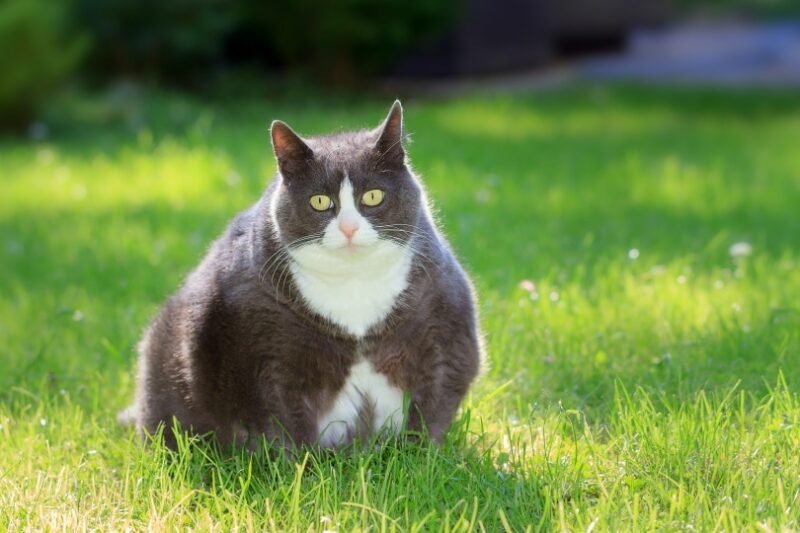
Were you aware that in 2022, a whopping 61% of cats were overweight or obese?1 While this means that almost two out of every three cats are affected, fortunately, there are many ways for cat owners to combat this extra body fat. Overall, it is known that weight loss can be brought about with the proper diet, the correct restriction of calories, and physical exercise.
In this article, we’ll discuss information about weight, how an appropriate food/diet plan can be put in place, and numerous overall strategies on how to get your cat to lose (or prevent gaining) excess weight.

Why Is Their Weight Important?
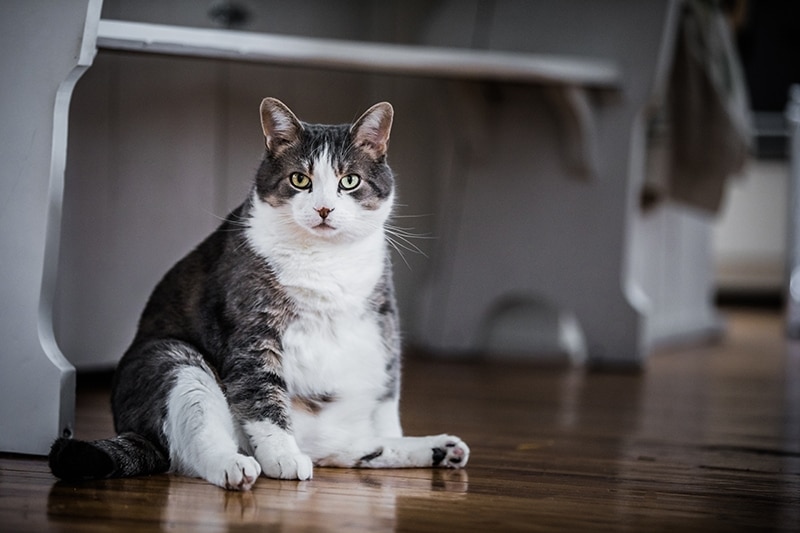
For context, a cat is considered to be overweight if they are 10–20% above their ideal body weight, while a cat is considered to be obese if they are greater than 20% above their ideal weight. Even if your cat is not overweight currently, it is easier to prevent than to treat obesity. Therefore, the tips in this article are really for any cat owner, whether they have an overweight cat or not!
Just as with humans, weight is an important part of the puzzle in a cat’s overall health. In fact, it has been shown that overweight pets have a higher risk of various disease associations. This excess weight can cause, or if already present, exacerbate medical health issues such as diabetes, osteoarthritis, renal disease, some types of cancer, etc. Furthermore, the hormones that are given off by extra fat tissue have been found to keep the body in a long-term state of inflammation.2 In addition, extra weight can simultaneously shorten a cat’s life span and cause them to have a decreased quality of life.

The Veterinarian’s Role
A weight-reduction plan should be evaluated and carried out under the direction of a veterinarian. In addition to obtaining an accurate body weight and a thorough history coupled with a physical exam, they may utilize lab work to rule out the occasional medical cause of weight gain. Furthermore, they can counsel you on your individual cat’s ideal body weight and how to determine your cat’s body condition score (BCS) and muscle condition scoring (MCS).
A BCS determines a pet’s body fat; this is done by feeling for fat across the ribs, looking at fat distribution from above, and looking at fat distribution from the sides to determine an overall score. The score can be based on either a 5-point or 9-point scale. For the 1–5 point scale, a 1 is an emaciated cat and a 5 is an obese cat, with a 3 being an ideal body weight. On the 1–9 point scale, a 1 is also emaciated, a 9 signifies obesity, and for cats, a 5 is ideal. An MCS determines muscle mass and includes visual examination and palpation along the body at specific points to determine if muscle wasting is present in mild, moderate, or marked amounts.
Furthermore, your cat’s vet can teach you how to read pet food/treat nutrition labels and calculate nutrition requirements correctly. This information can be used to calculate how many calories your cat is actually eating. Other nutritional calculations such as resting energy requirements (RER) and maintenance energy requirements (MER) are used by veterinarians to help determine how many calories your cat should be eating to lose weight safely over time. If a cat loses too much weight too quickly or stops eating suddenly, there can be medical problems, such as hepatic lipidosis (also known as fatty liver syndrome) which can be life-threatening.
As a reference, a cat should have 24–35 calories per pound per day; but a veterinarian can help calculate a good starting point given your cat’s factors.3 In addition, a good and safe reference range of a cat’s body weight loss per week is 0.5–2.0%.4
Veterinarians can come up with a specific feeding plan that allots out the amount/caloric density of food (and potentially some small allotment for treats) for your cat to lose weight based on several of the above-mentioned factors. This plan will consider your cat’s ideal body weight, their BCS, MCS, total calories being consumed currently, RER and MER calculations as well as your cat’s stage of life, any concurrent diseases, their lifestyle and activity levels, etc.
The 20 Tips to Lose Weight
Food and Calories

1. Measure it Out
Use an actual level measuring cup (or even better and more accurate, a kitchen weight scale!) to find out exactly how much you are feeding your cat. This is the first step to understanding and becoming aware of where you’re starting, and going forward, to accurately control the amount of food (and calories).
2. Label Information
Obtain all the nutrition/label information from your sources of food, treats, food used to give medicine, homemade diets, table scraps, etc. This label information may be on the bag in question, or you may need to research or contact the manufacturer, etc. This step can help you determine where all the calories for your cat are coming from and help a veterinarian in nutritional calculations.
3. Quality Food
Feed a good, quality food. A diet change may or may not be needed. There are even prescription diet cat foods that may be an option for your cat. Discuss with your cat’s veterinarian any specific diet recommendations and diet transition instructions.
4. Overfeeding
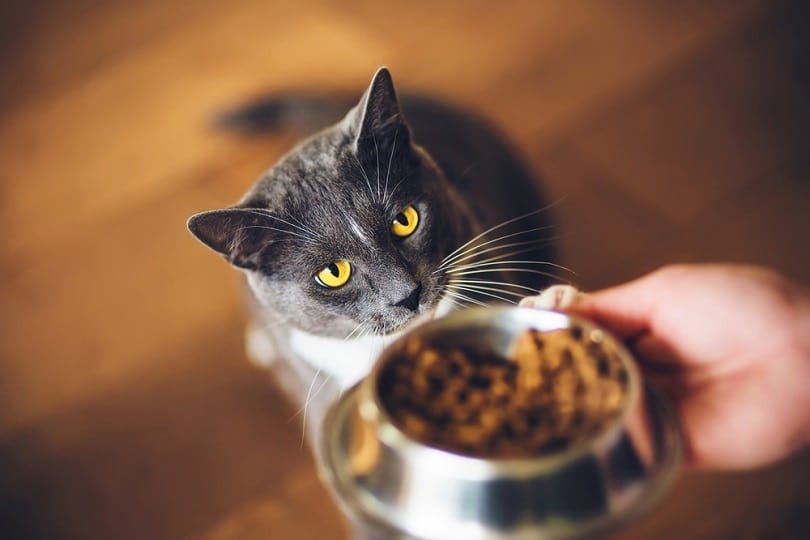
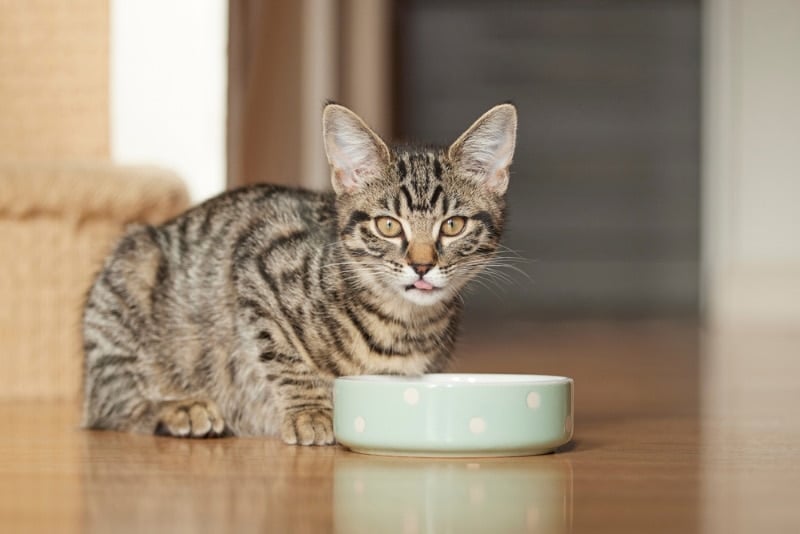
Do not allow free feeding (always having food available in the bowl). One of the biggest human-related factors to a cat being overweight is overfeeding5. This is very common, and many pet owners do this unknowingly, but our eyes are bigger than their stomachs. Remember, if a cat has free access to food, this is like having a buffet available all the time!

5. Communication
Make sure everyone in the household who could be taking care of the cat is on the same page. Communication is important! Some tips to prevent doubling up food on accident could include a check-off system or to pre-measure out and label bags of food/treats for each day of the week.
6. Reduce Treats
Reduce calories given from treats to less than 10% of a cat’s daily allotted calories (as long as they are being given a full and complete diet)6. Alternatively, you could instead give rewards with attention, special or favorite toys, catnip, brushing, etc.
7. Remove Human Food
Remove human food or table scraps from the cat’s diet. This is not only unhealthy for your cat but is easy to overload, giving excess calories even with small amounts of food. If you’re only allotted around 200–300 calories per day, even a small square of cheese can add up!

8. Automated Feeders
Automated, timed feeders that dispense a pre-measured amount may be helpful for some so a cat does not associate their owner with feeding them. In multi-cat households there may need to be some oversight with this so that separation still occurs. Some feeders even utilize a sensor collar that will only open when the cat in question is within range and then close off the food if the cat moves away.
9. Splitting Meals
Try splitting the allotted meals up in differing amounts or at different times. For example, if your cat begs for food overnight, try giving a smaller meal in the morning and a larger meal at night. If you feed your cat once or twice a day and the cat begs for food between meals, try dividing out the specified total calories into 3 or 4 smaller meals.
10. Supervision
In a multi-cat household, it is essential to ensure that each cat is only eating the food allotted to them. With more than one cat, there can also be competition or resource guarding for food. This could be remedied by physically separating them during their mealtimes (such as in a different room behind a closed door, a tall baby gate, etc.) or as mentioned above, a cat feeder with a sensor collar.
Increasing Physical Activity

11. Make Them Work
Make your cat work for their food. Move their meals around regularly to areas that they don’t normally frequent, so they have to go far away from their usual hangouts and ‘hunt’ for their meal.
12. Cat Tree
A cat tree or using vertical space to jump up to get to their meal can also give some additional physical activity.
13. Toys
Because cats have such a predatory instinct, they may find toys such as play mice, feathers, teaser wands, or laser pointers enticing. Provide a variety of toys but rotate them to discourage boredom.

14. Obstacle Course
A homemade obstacle course, especially with catnip or an allotted small treat as encouragement, can incentivize even more movement!
15. Outside Time
Trying a harness and leash walk outside may be a physical activity that some cats enjoy.
16. Exercise Wheel
A cat exercise wheel that allows for walking or running may be worth looking into for some inquisitive cats.

Additional Factors

17. Scatter Their Food
You could try tossing your cat’s food kibbles out and around so they have to chase it and expend some energy to get their meal!
18. Food Dispensing Toys
A food and exercise combination tip is to use food-dispensing balls or toys. These are fabulous in that the cat must use both their mind and body. And, once a cat knows how to reliably use it, you could put a portion (or all of) the cat’s allotted calories to keep them working. It's a win-win-win.
19. Routine Weigh-ins
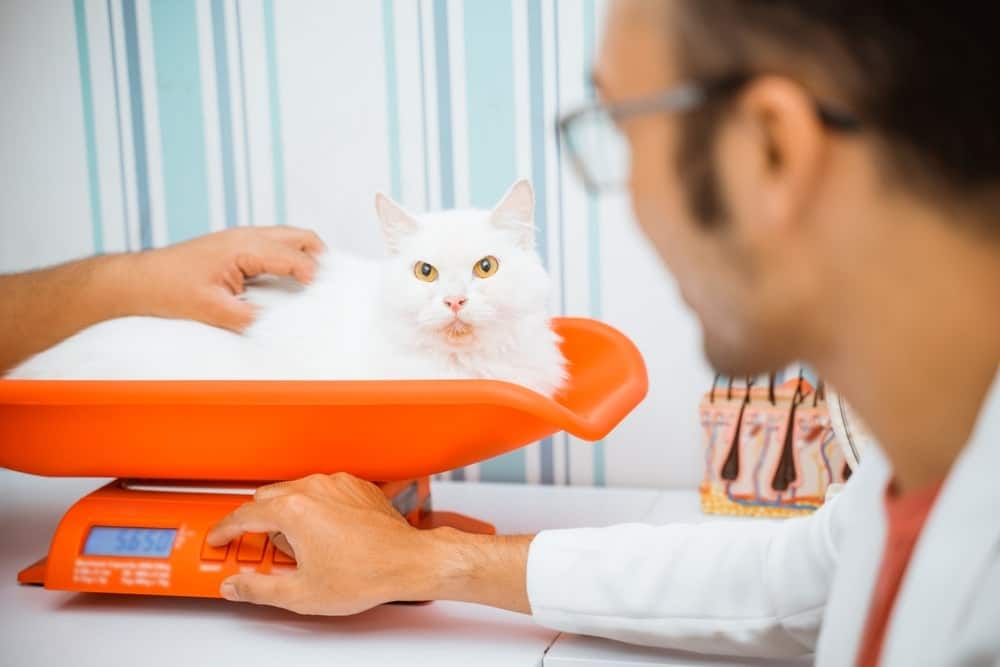
How do you know if your cat is making progress? Routine weigh-ins and recheck visits. A baby scale (at home and/or at the veterinary clinic) can be a helpful tool in this regard. Monitoring for progress as well as any needed changes is key.
20. Environmental Enrichment
In one study, overweight cats on a restricted diet with increased environmental enrichment had activity collars and were found to have more activity than overweight cats with the same feeding instructions without the increased enrichment. You may consider this and include window perches, bird feeders outside a window, scratching posts, etc. to help provide overall good mental well-being for your cat.
Conclusion
A cat’s weight loss plan typically needs a multifaceted approach to solve (or prevent) this common problem. As your cat’s vet is your furry family member’s biggest advocate, they will use science and medicine in creating your cat’s best-individualized weight loss (or maintenance) plan. As your cat’s owner, you will be responsible for carrying out the plan daily to ensure the best result for your pet.
It’s helpful to know that both you and your cat’s veterinarian are essential partners in your cat’s weight loss journey and that your cat will be able to live their best life because of your teamwork!
Sources
https://thevillagevets.com/blog/tips-for-helping-my-cat-lose-weight/
https://vcahospitals.com/know-your-pet/creating-a-weight-reduction-plan-for-cats
https://www.preventivevet.com/cats/recognizing-and-helping-overweight-and-obese-cats
https://veterinarypartner.vin.com/default.aspx?pid=19239&id=10160836
Featured Image Credit: Daisy Daisy, Shutterstock

Expert cat care, straight to your inbox
Vet-reviewed advice, behavior tips, and the best of Catster. Free, and you can unsubscribe anytime.
By signing up, you agree to our Terms & Conditions and Privacy & Cookies Policy.
Dr. Rachel Ellison DVM (Veterinarian)
Dr. Rachel Ellison lives on a mountain in Utah with her husband, daughter, and son, as well as their animal menagerie— a Bernese Mountain Dog, a Bengal/Siamese mix, and an orange tabby cat, as well as numerous chickens. During her free time, she enjoys being with those she loves, cooking and baking, reading, hiking, sharing her knowledge about cats, and exploring nature and the world around her.
Join the conversation
Ask a question, share your story, or send private feedback.