Cat Horned Paws: Our Vet Explains What It Is & What to Do

In this article
Throughout history, cats have been seen in many different roles—viewed as sacred and worshiped as gods, or maligned as symbols of sorcery and harbingers of evil—but did you know they could grow horns?
Before you start picturing some sort of nightmarish feline/bovine mutation, there are some important things to know about these horns. For a start, they are nowhere near their head. These horns are also tiny, so tiny that your cat may have them and you haven’t even realized it because they are under their feet.
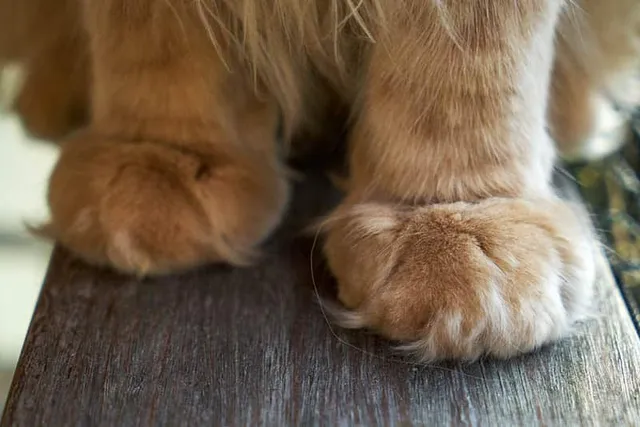
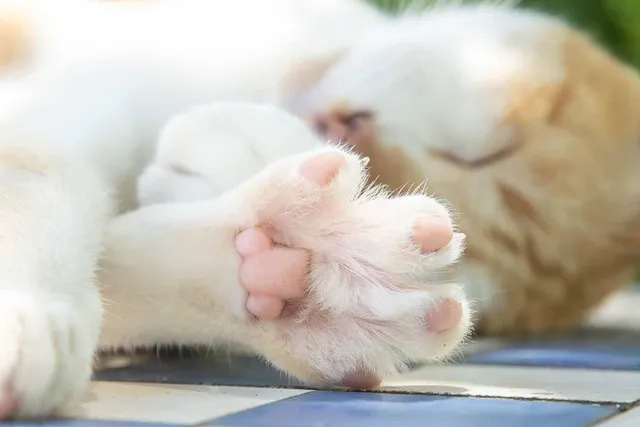
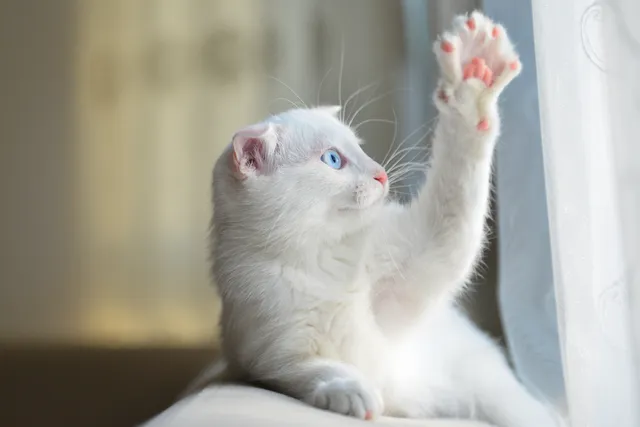
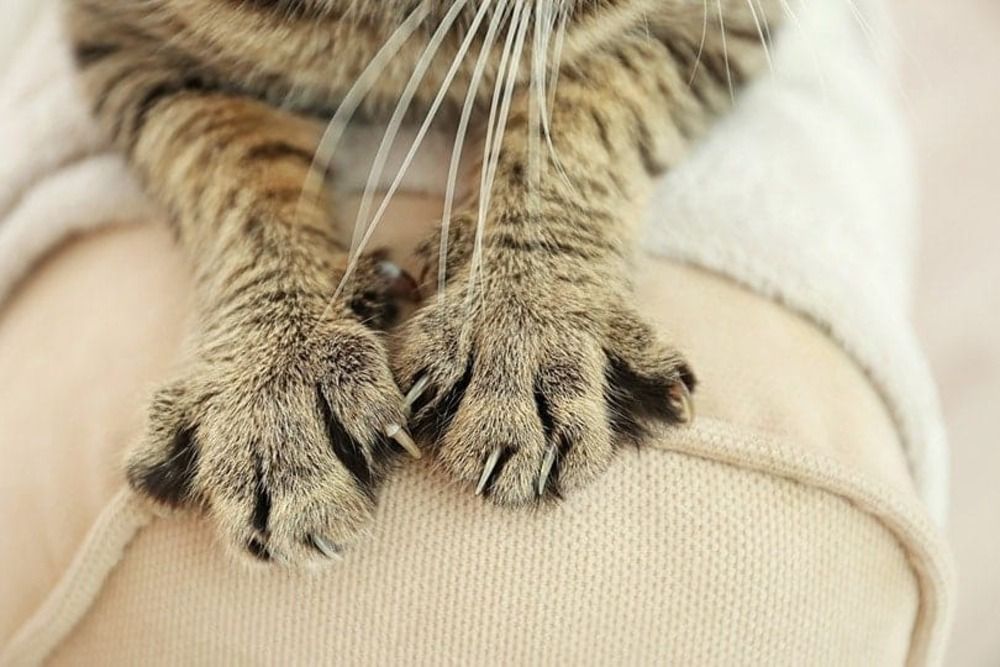
Ask any cat lover, or ailurophile, as they are also known, what their favorite part of the feline body is, and you can guarantee that at least half will start talking about toe beans. Shiny and black, perfectly pink or multicolored, feline paw pads are undeniably cute. Essential for silently traversing rooftops, balancing on fences, and stealthily hunting prey, these pads need to be kept in good condition, which is why you’ll often see cats spending ages licking, nibbling, and cleaning their paws. If your cat is paying extra attention to their paws, it could be due to a horn.
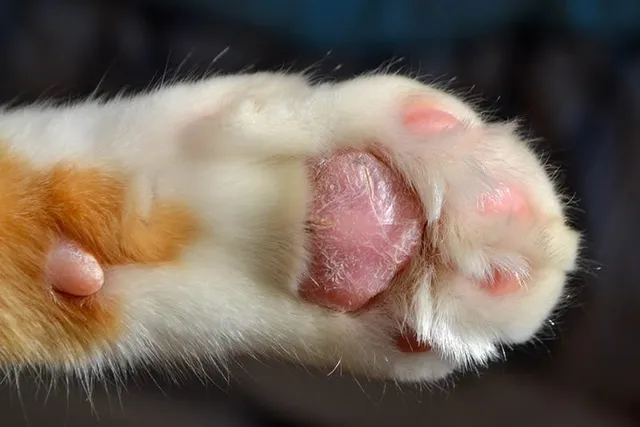
Cat cutaneous horns are made from hard, thickened skin growing from the paw pads. Although most are completely harmless, some may cause discomfort and lameness or be an indicator of underlying disease.
If you want to know if your cat has horns and what that might mean, keep reading.

What Are Cat Horned Paws?
There are a number of conditions that can affect a cat’s paws, with the most common being injury, so if you notice your cat limping, holding up their foot, or chewing at a toe, you’ll want to take a look.
Feline footpad hyperkeratosis is a skin condition that causes cutaneous horns on cats' paws, which are formed from an excessive buildup of keratin, the protein found in epithelial cells that forms the outer protective layer of skin, hair, and nails. Most often, they grow from the side of the pad and are found incidentally during a nail clip or routine toe-bean appreciation session. Often mistaken for extra claws, these “horns” are actually bits of thickened skin, so tough that they feel like claws or horns. They don’t often cause problems, but if they form on the middle of the pad rather than the side, they can become a problem.
Some cats will have a single horn and some will have multiple, which may be linked to why they have formed.

What Causes Cutaneous Horns on Cats?
Like a callus, some horns form as a result of wear and tear, as seen on cats with toughened pads that have adapted to exploring a range of outdoor surfaces. Pressure and friction lead to excessive keratinization of the pad, and a horn develops as a result. This sort of reactive horn can also form as a result of acute trauma or damage to the pad. These sorts of horns are usually found on the sides of the pad or near the nail bed and rarely cause problems. They may provide some protection against damage.
Cats that develop horns in the middle of their pads are more likely to develop discomfort and lameness as they put pressure on the underlying tissue. These horns are almost always seen in cats with Feline Leukemia Virus (FeLV), a life-threatening disease transmitted in the saliva that affects the immune system and bone marrow. These cats will sometimes have horns appear in other places as well, such as the nose and eyelids. There is little information to explain why these horns are prevalent in cats with FeLV, but in these cases, the horns themselves are benign.
Other causes of cutaneous horns in cats include viral papilloma or a form of carcinoma (cancer).
How Are Cutaneous Horns Treated?
In most cases, cutaneous horns do not require treatment, but if they grow quite long, they can be trimmed in much the same way as a nail would be. The horns associated with FeLV are a bit trickier to treat due to their location in the center of the pad, but if needed, can be trimmed, filed, or surgically removed or debulked.
It is always best to take your cat for an examination at the vet to confirm the diagnosis, look for other underlying conditions, and decide on the best course of treatment.

Other Feline Foot Problems
Whilst we’re on the subject of toe beans, some other problems can affect feline feet, particularly their paw pads. These include:
1. Plasmacytic Pododermatitis
Also known as “Pillow Foot,” this condition results in the paw pads of one or more feet becoming puffy and susceptible to trauma. It is caused by the overstimulation of an inflammatory pathway, which may be due to an autoimmune problem, hypersensitivity reaction, or Feline Immunodeficiency Virus (FIV). Cats with pillow foot often present with painful or ulcerated lesions, as the condition causes thinning of the skin, and the enlarged tissue is more easily damaged.
Treatment involves managing the damage to the pad and treating any infection and addressing the underlying problem. Cats negative for FIV may be given immunosuppressive medication to control the inflammation. In cats with FIV, treatment usually involves managing swelling, pain, and infection of the feet, as immunosuppressive medications are contraindicated in these patients.

2. Ingrown claws
Sometimes a claw will overgrow and curl until it is growing into the paw pad. It is quite common for this problem to go unnoticed for some time, as cats will often “get on with it” and show little sign of there being a problem until an infection develops.
Treatment is usually as simple as trimming the problematic claw, but sometimes antibiotics and pain relief will be needed if the claw has dug in quite far. Cats that have had ingrown or overgrown claws will often have them again, so regular nail trims are recommended.


Final Thoughts
A seemingly harmless problem, cutaneous horns on cat paws can actually be an indicator of a more serious illness and should not be ignored. In many cases, these will be benign growths, but it’s always best to find out.
Because cats don’t always tell us when there is a problem, it’s up to us to regularly check our pets, top to tail, paying special attention to the toe-beans.
Featured Image Credit: Africa Studio_Shutterstock
Expert cat care, straight to your inbox
News, insights, and useful advice, delivered to you.

No spam — unsubscribe anytime.
By signing up, you agree to our Terms & Conditions and Privacy & Cookies Policy.
How useful was this post?
Click a star to rate. You can leave written feedback afterwards. (We read all feedback.)
Dr. Karyn Kanowski BVSc MRCVS (Veterinarian)
Dr. Karyn comes from Queensland, Australia, and has lived in the UK for the past 10 years. In 2010, she graduated from The University of Queensland School of Veterinary Science and also has a Bachelor’s degree in Zoology. She is passionate about using evidence, experience, and owner collaboration to provide the best solutions for pets, and believes in making reliable information about animal health accessible to all. Dr. Karyn shares her home with five cats, four dogs, and one husband. When she is not in the scrubs, she spends her time writing, gardening, and cleaning up pet hair!