Why Did My Cat Poop on My Bed? 8 Possible Reasons & Solutions

In this article
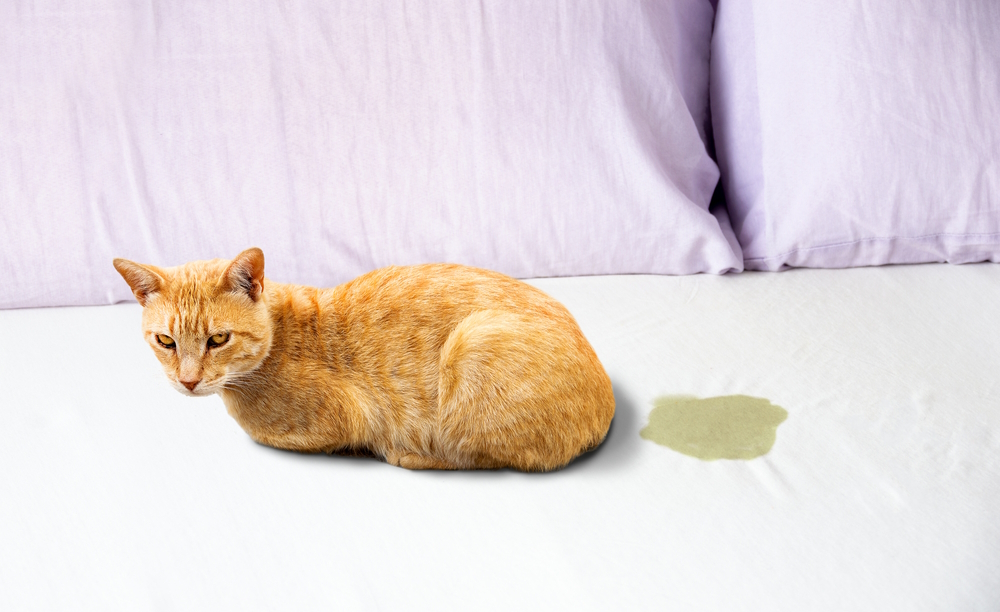
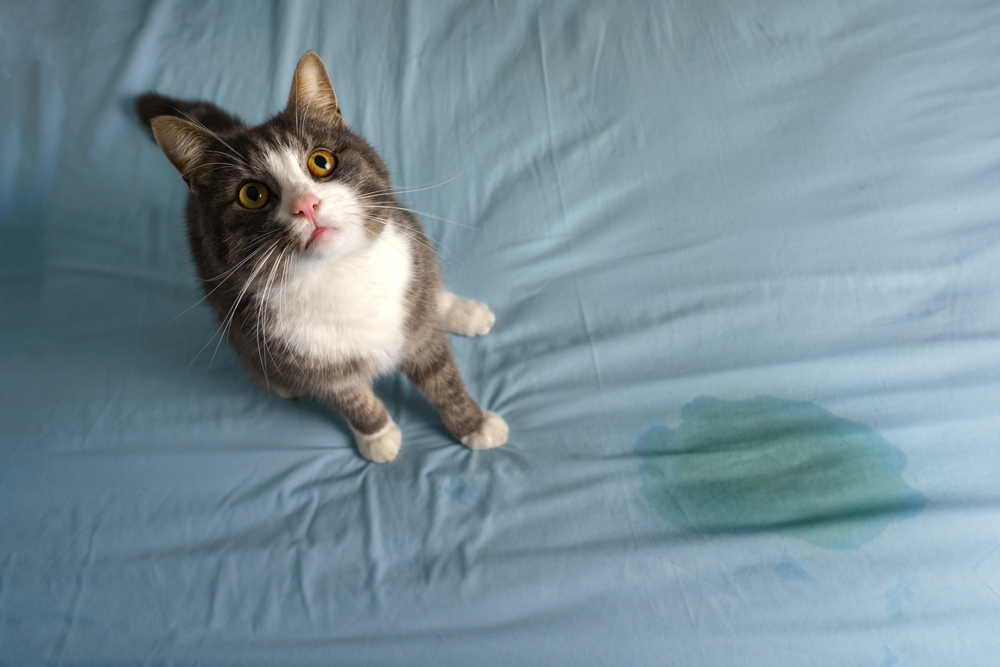
If you’re ready to hit the hay, the last thing you want to deal with is a fresh pile of cat poop on your bed. But you’re probably here because your sweet kitty has been using your sleeping space as a toilet, and you want answers. So, why is your cat pooping on your bed? There are more answers than you might think. Because it could indicate a more significant underlying issue, you'll need to get to the bottom of what’s going on.

Why Did My Cat Poop on My Bed?

You can introduce kittens to the litter box as early as 3 weeks old. At this time, they should get well-acquainted with their private bathroom so they learn the ropes. Cats are arguably the easiest domesticated animals to house-train because they do all the hard work for you. Most kittens are litter-trained by 4 weeks, but it can vary slightly depending on the cat.
They have a natural desire to use the potty in an area where they can easily cover up their mess. Kittens usually learn by watching their mother. Generally, cats are spotless animals that take personal hygiene very seriously. They self-bathe, grooming their bodies all on their own. If you have a fully-grown cat that just started this behavior, you know that it isn’t related to litter training.
So, when your cat goes to the bathroom outside the box, it’s an obvious concern because it’s not normal. While issues like spraying can happen because of territorial marking, pooping has another cause entirely.

The 8 Reasons Why Your Cat Pooped on the Bed
1. Cat Litter Problems
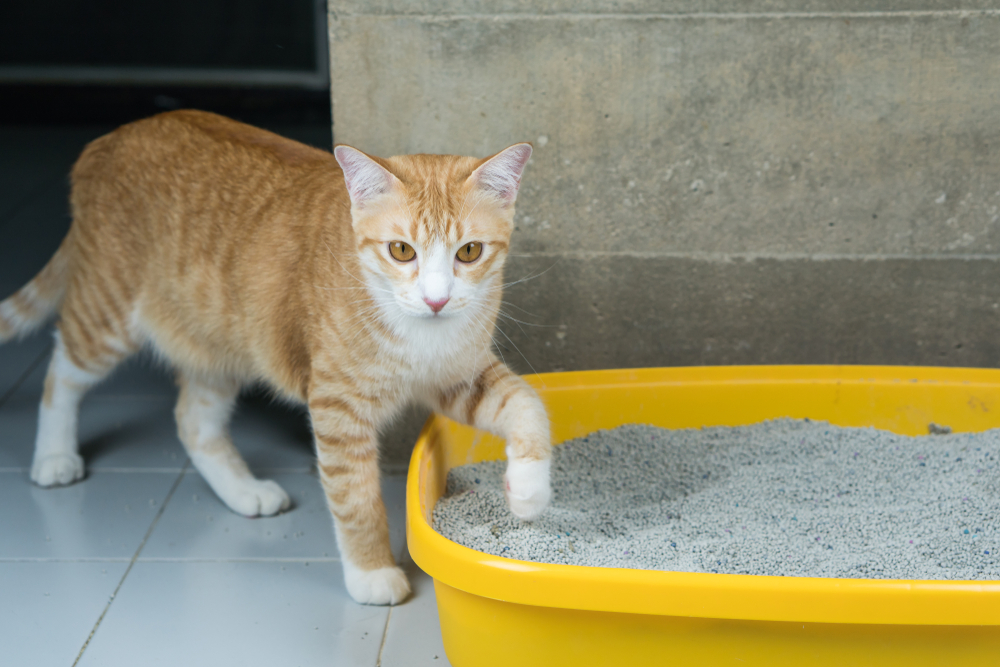
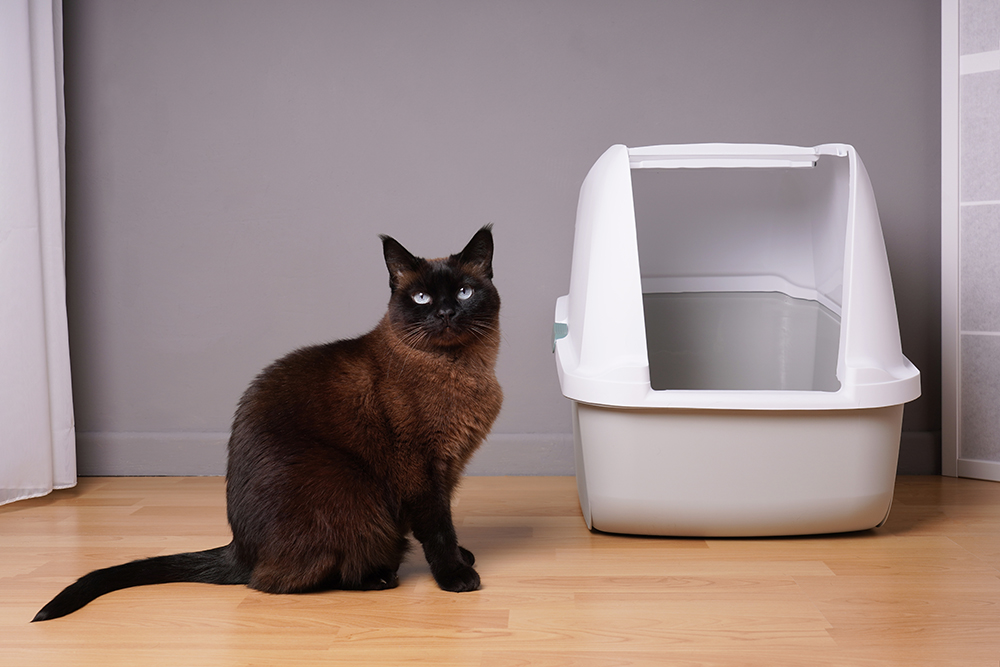
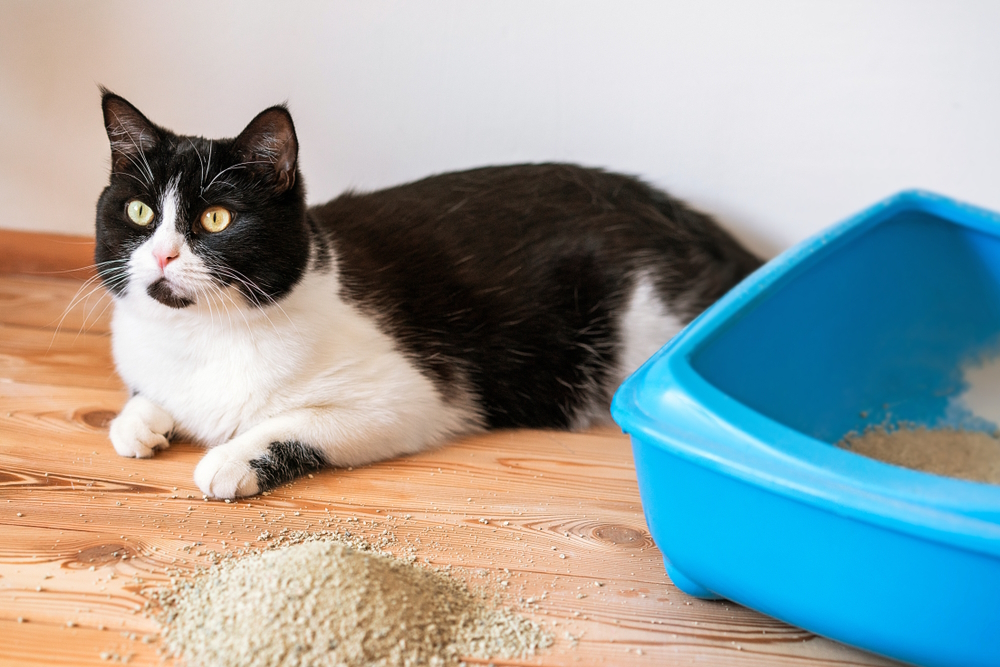
If the litter you buy irritates your kitty’s skin or their allergies, they might not want to use the litter box. Look for other signs like sneezing, skin irritation, and watery eyes. Cats also hate dirty litter boxes.
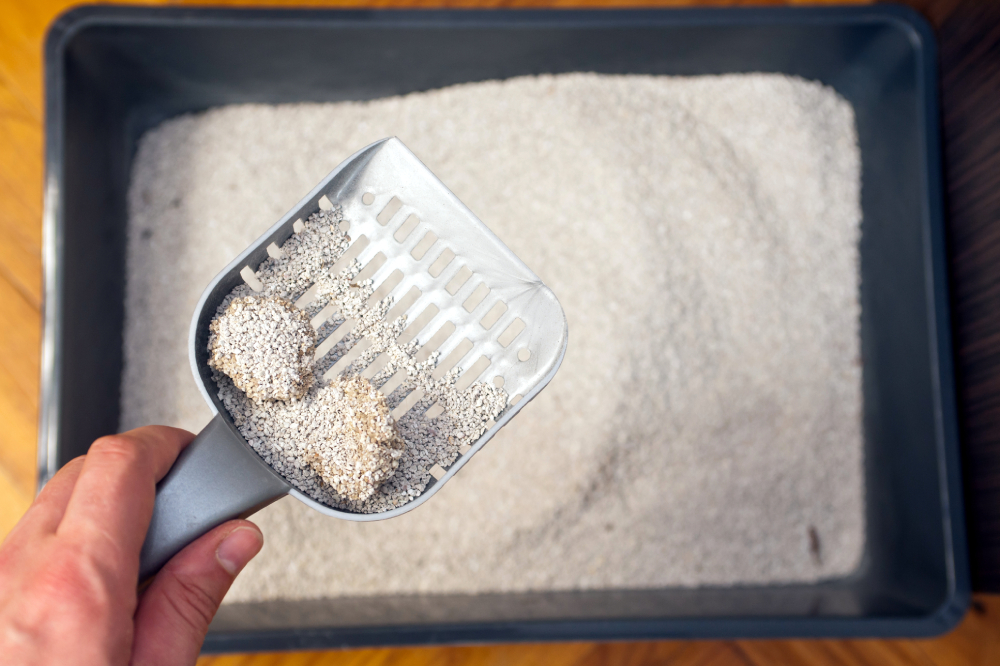
If you haven’t been keeping up with the cleaning like you usually do, this could be their way of signaling that it needs to happen more. An enzyme cleaner is the perfect solution between litter changes to keep the litter box free of stuck-on messes, and a deodorizer will ensure that all odors are eliminated upon contact.
Combating tough cat litter smells is an ongoing battle for pet parents but luckily, there are products out there designed to help! Two products that significantly reduce odors are the Hepper Litter Additive and the Hepper Enzyme Spray.
| Image | Product | Details | |
|---|---|---|---|

|
Hepper Advanced Bio-Enzyme Pet Stain & Odor Eliminator Spray |
|
Check Price |

|
Advanced Bio-Enzyme Cat Litter Deodorizer |
|
Check Price |
At Catster, we’ve admired Hepper for many years and decided to take a controlling ownership interest so that we could benefit from the outstanding designs of this cool cat company!
2. Cat Illness
If your cat pooping on the bed is new behavior and there have been no recent changes in the household, consider an illness first. Some health problems are very time-sensitive, so knowing what to look for can help. There can be several medical reasons why your kitty has taken an interest in using your bed as a litter box. Here are some of the illnesses that might be the culprit:
Click the illness to read more about it:
Intestinal Parasites
Intestinal Parasites: Issues like intestinal parasites can cause nasty side effects. Because worms can cause diarrhea or constipation, your cat might not be able to get to the litter box on time.
The most common types of intestinal parasites found in cats are:
If you think gastrointestinal parasites might be to blame, you might look for other signs like:
If you make a vet trip and discover your kitty has intestinal parasites, they must take a deworming medication. The specific treatment will depend on the species of parasites found. Some are easier to eradicate than others, so be sure to follow the vet’s instructions carefully
IBS
Irritable Bowel Syndrome: IBS is a gastrointestinal condition that produces an extra-strong urge to eliminate with little notice. If your cat suffers from IBS, your bed probably isn’t the only place they poop when they can’t make it.
This condition usually appears in middle-aged to older cats, but it can happen at any age. There might not be an excellent way to pinpoint what causes it, but doctors believe it can be a combination of their diet, intestinal bacteria, and immune system health.
Signs of IBS in cats include:
If your vet runs the necessary tests to determine your cat has IBS, they must create a health plan to reduce the signs. Usually, a vet will try a combination of dietary change, stress management, and prebiotics to see if the condition improves. Severe cases might require anti-inflammatory drugs and antibiotics.
Food Sensitivity
Food Sensitivity: Like humans, cats can suffer from food allergies, and they can be tricky to sort out. Your cat will likely have to undergo food trials to eliminate specific ingredients in their diet, which can help your vet determine which component is causing the sensitivity.
Other signs of food sensitivities in cats include:
Hyperthyroidism
Hyperthyroidism: A disease of the thyroid gland where the thyroid becomes overactive and speeds up the cat’s metabolism. It causes food to move more quickly through the intestines, which can cause diarrhea. It also causes behavioral changes, and the cat becomes more active, aggressive, nervous, and vocal.
Other signs of hyperthyroidism are:
Luckily, most cats who develop hypothyroidism are over 12 years old. So, the likelihood of it happening to your cat is much less if they’re younger.
Diabetes
Diabetes: Yes, even our beloved felines can get diabetes, and it can cause numerous side effects. The condition wouldn’t cause your cat to poop on your bed, but it can make them exhibit new, unwanted behaviors that can vary.
Most commonly, diabetes in cats causes:
Your vet can run a few simple tests to rule out or confirm diabetes as a possibility.
Liver Disease
Liver Disease: When your cat develops liver disease, it will wreak havoc on otherwise typical aspects of their lives, including trips to the litter box. The changes it creates in the body can trigger behavioral changes and physical problems.
The signs of liver disease in cats include:
There is no at-home test for liver disease, but they must receive treatment. If you’re unsure, it’s always best to consult a veterinarian.
Cancer
Cancer: Don’t fret because it’s probably not cancer. However, that doesn’t mean you shouldn’t take it seriously if your cat is behaving oddly. Your vet will rule out many common health problems before they check into cancer.
Cancer can also mimic the signs of other illnesses. So, try not to self-research too much and get stressed out. Because cancer can be asymptomatic, blood tests (among other tests) will alert your vet.
If you are concerned about the health and well-being of your pet, seek veterinary advice for the best course of action.
3. Environmental Changes
Cats are creatures of habit. If things have been pretty routine around your household and then changed suddenly, it can cause bad behavior. Sometimes, your cat, much like a child, can’t process new information without acting out a little.
If you remember when the issue started, you might think of something that changed drastically, even if it wasn’t that big of a deal to you. It could be something as simple as reorganizing your bedroom. It can throw your cat off completely, making them do questionable things in response.
4. New Pets or Children

If you welcome a new addition to the household—human or animal—it may not go over well with your roommate. After all, you didn’t ask your cat if someone else could live with you, and your cat may be having a hard time adjusting to this significant change.
They might use your bed as a toilet, especially if the new pet or person stays in your room. This is more a cry for attention than a spiteful action. Remember to make introductions slow and be patient with the process.
5. Untreated Cat Stress
If your kitty has an anxiety condition or high stress level that you haven’t noticed before, it's a sign to pay attention to. Cats can have atypical anxiety levels, being very sensitive to everyday stimuli. If you have a cat you might call “skittish,” nervousness could be the culprit.
If your cat started using your bed to poop, it could signal that something around their litter box stresses them out. Maybe you recently placed the litter box in the laundry room, and now they’re scared of that big, loud dryer.
6. Multi-Cat Households

Cats can be territorial or combative with other household felines. If they feel they need to make their statement, they might poop outside the litter box. Competition is real for cats. If they feel upset about the natural order, it can cause a battle to assume the alpha position.
Even though it isn’t your fault, your cat might be doing this toward other cats and not you.
7. Plain Old Spite
We’ve all been at the receiving end of our kitty’s scorn. It’s not a pretty place to be. If you have done something to upset your feline, you might want to rekindle the relationship. Your cat might be telling you that they disapprove of your new boyfriend. Or they might smell another animal on you when you come home. You must explore the triggers so you can eliminate the problem.
8. Cat Habit
Once your cat has used the bathroom in an area, it can be a real pain trying to remove the scent. Even when you can’t smell it anymore, your cat can. Now that they’ve used your comforter as their toilet, they might think they can go there whenever they please. If it’s become a habit, try using an enzymatic cleaner to neutralize the smell.

How to Get Your Cat to Stop Pooping on the Bed
If your cat is pooping on the bed and you can’t figure out why you can try a few things to find the root cause.
1. Look for Other Signs
There might be other odd behaviors going on that you might have overlooked. Make a list of other, if any, signs your cat is displaying. Try to investigate the possible causes first to see if something has changed.
2. Eliminate Potential Triggers
If you know the cause, you need to find a way to accommodate your cat. If they’re scared of a new household member or don’t like their new litter, they’re counting on you to solve it. Try to eliminate one thing at a time. Once your cat stops pooping on the bed after you change a few things, you can discover the original trigger.
3. Keep Your Cat Out of Your Room Unattended

Make sure you shut your bedroom door when you’re not in it. That way, they really can’t poop on your bed. If the habit continues in other inappropriate places, you can visit a vet.
4. Use Kitty-Safe Sprays
There are certain smells that your kitty would rather stay away from completely. You can make your own spray bottle at home by mixing citrus juice (orange, lime, lemon) and water. There are plenty of online, at-home suggestions for safe cat-repelling sprays.
5. Maintain the Litter box
Cats don’t like dirty litter boxes. If you wait too long to clean it out, your cat will find other places to go. To avoid that, clean the litter box once or twice a day, depending on the number of cats.

- ADVANCED ENZYMATIC CLEANER - Penetrates the most stubborn smells and stains at the deepest molecular levels to dissolve any pet mess you encounter and lift it away at the source.
- FOR ANY MESS, ON ANY SURFACE - This pet odor eliminator cleans your carpets, floors, furniture, fabrics, and more. Whether it's urine, feces, vomit, or drool, you can erase all foul spots and smells!
- FRESH, NATURAL ODOR - Our unique formulation doesn't rely on dangerous or unpleasant chemical fragrances to get the job done. We eradicate smells and stains, not just cover them up.
At Catster, we’ve admired Hepper for many years and decided to take a controlling ownership interest so that we could benefit from the outstanding products of this cool cat company!
6. Make a Vet Appointment
To be safe, take your cat to the veterinarian for an examination. Realistically, there could be something you’re overlooking that could be serious. To err on the side of caution, get your kitty examined to rule out anything more significant.
Summary
So now that you have a pretty good idea about what could be causing this behavior, you can stop asking yourself "Why is my cat pooping on my bed?" and start to work on trying out new methods to solve the issue. Just know that there is a solution to every bad action. You might not be able to pinpoint an exact reason, and that’s why it’s crucial to work closely with your vet to determine the cause.
Related Reads:
Sources
Featured Image Credit: Olga Shusters, Shutterstock

Expert cat care, straight to your inbox
Vet-reviewed advice, behavior tips, and the best of Catster. Free, and you can unsubscribe anytime.
By signing up, you agree to our Terms & Conditions and Privacy & Cookies Policy.
As a freelance dog writer and passionate pet enthusiast, Ashley Bates is pursuing studies in animal therapy. A mother to four human children and 23 animal companions, Ashley is dedicated to volunteering at shelters, advocating for animal rights, and rescuing animals in need. Her goal is to spread awareness, provide education, and offer entertainment about pets to reduce homelessness. Ashley's specialties include dogs and cats.
Join the conversation
Ask a question, share your story, or send private feedback.