Get

In Your Inbox

Catster is reader-supported. When you buy via links on our site, we may earn an affiliate commission at no cost to you. Learn more.

How to Burrito Wrap a Cat: 7 Simple Steps

Share

As a cat volunteer at San Francisco Animal Care and Control (ACC), I work with homeless cats usually referred to as “feral,” who have been humanely trapped or brought to the shelter as strays. There are a lot of kittens who have been separated from their moms, and obviously, these babies are particularly fearful of people. They have only known outdoor living, perhaps in a feral colony or even fending for themselves on their own.

Because these kittens are so young and wild, they need a lot of socialization before they are ready for adoption. It’s important to gain their trust and teach them how to interact safely with humans as well as feeling safe. They hate being handled, and also need a day or so to adjust to being confined to a cage.

If you want to teach a terrified feral kitten that you aren’t a diabolical predator, it may be time for the burrito wrap! This is a great, humane way to teach your kitten that hands and the big scary creatures attached to them will not hurt them.

divider 3 paws

How to Burrito a Cat in 7 Easy Steps

1. Approach the kitten slowly and calmly.
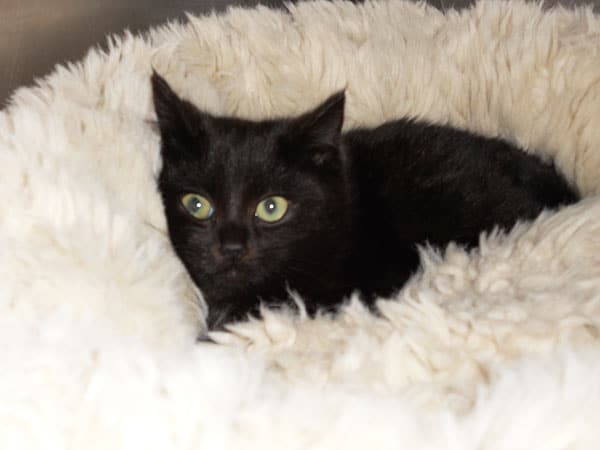
This little guy, Finnegan, was extremely scared and hunched down inside his bed at the rear of his cage.2. With a hand towel in one hand, reach into the cage with your other hand and slowly and gently lift the kitten out by the scruff of his neck.

Put the towel across his back and hold him against your chest. Speak softly and reassuringly to the kitten. Take a moment to gently stroke his chin, cheeks, the top of his head, or the back of his neck. He will still be scared, but feeling your heartbeat and your finger stroking his forehead will remind him of mom and feeling safe.

If you meet a lot of hissing at this stage, reposition kitty if necessary to better prepare him for burritoing. Fold the towel so it is flat and kitten-sized, or give him a time out to calm him with gentle cheek rubs and soft talking.


3. Loosely wrap the towel around the kitten’s back, draw him away from your chest, and continue to wrap the towel across his front, as if you were drying him after a bath.

You should wrap him tightly, but not so tightly that he cannot move and his breathing might be affected.


4. Gently but firmly hold the kitten on your lap.

The burrito is a success if the only part of the kitty you see is his head sticking out of the wrap!


5. Hold the burritoed kitty up against your chest so he can feel your heartbeat and continue to gently stroke him and talk to him.

Because he’s securely wrapped, he won’t be able to fuss, swat, scratch, or flee.

At this stage, many scared kittens begin to accept the attention and handling, and some of them even break out into purring. Note: Never force a kitten, wrapped or unwrapped, onto his back for more than a few seconds.


6. If the kitten seems to have relaxed after a couple of minutes, unwrap him a little and pet him gently on your lap.

The sensation of being wrapped can be uncomfortable, and you want them to relax as much as possible.


7. If the kitten is really struggling, howling, hissing, or spitting, keeping him burritoed may distress him further and make him even more fearful the next time he sees you.

Never force it; if he is too overwhelmed, gently place him back in his bed and let him rest. The point is to teach him that people aren’t going to hurt him — so you don’t want the towel associated with terror.

divider 3 paws

Conclusion

You may need to use the burrito approach for a few minutes a day for a few days in a row, but you shouldn’t rely on a wrap as the only way to socialize a frightened kitten. Gentle petting and talking, both inside his cage and out, will help him get used to people.

Want content like this delivered to you?

Sign Up For Our Newsletter

News, insights, expert advice, and everything cat

* By submitting, you agree to our Terms & Conditions and Privacy & Cookies Policy.


How useful was this post?

Click on a star to rate (you can leave written feedback after clicking submit)

Help us improve Catster for pet parents!

Your feedback really matters.

What did you like about this post? Also how can we improve it?

Join the conversation

Leave a Reply

You’re very welcome to leave a comment or question. Please know that all comments must meet our community guidelines, and your email address will NOT be published. Let’s have a positive and constructive conversation.


Catster's Digital Magazine is Back!

Vet-approved health & behavior advice

Real cat stories & community features

Chatting With Dr. Matt McGlasson About Special Needs Kitties, Social Media Fame, and Rating Cat Toe Beans | Chatty Cattys, Episode 32

In this episode of Catster’s Chatty Cattys podcast, Dr. Karyn and Nicole sit down with a very special guest: veterinarian and social media...

Does Your Cat Need A Friend? How to Tell If Your Cat Is Lonely

Cats have a reputation for being perfectly happy on their own – independent, self-sufficient, and solitary. But, like many stereotypes, this one does...

Proof That Moving Cats Indoors Is Easier Than You Think

We know that indoor cats live longer and have significantly lower rates of illness and injury than those that spend part or all...

Why Cats Love To Get High

If you’re trying to find a cat in any home, the search almost always ends by looking up. They’ll be on top of...

More related

How Many Cat Breeds Are There in the World? (2026 Update)

Just about everyone can name a few dog breeds, such as Golden Retrievers, Labrador Retrievers, or Pit Bulls. In contrast, very few people...

AI & Pet Care According to Vets

As AI continues to evolve and become more integrated with the pet health and care industry, we decided to put this new technology...

Can Cats Eat Scorpions? Vet Approved Facts & FAQ

Cats naturally enjoy hunting, and small creatures are their favorite targets. Most insects do not pose threats to cats, but scorpions (and other...

Female Cat Behavior After Spaying: Vet Reviewed Changes to Expect

One of the side effects of spaying a female cat is behavioral changes. Some are short-term and directly related to the pain your...

Keep reading

How to Stop a Cat From Climbing a Christmas Tree: 6 Vet-Reviewed Safety Tips

Christmas is a time to decorate your home with decorations to get you in the holiday spirit. One such decoration that is found in most homes is, you guessed it, Christmas trees. It’s fun to put up a tree, and...

cat hiding in the Christmas tree

Why Does Cat Pee Smell Like Ammonia? 5 Vet-Reviewed Reasons

Cat owners who use effective cat litter and clean the litter box frequently don’t tend to have issues with cat urine odor. However, some cat owners still struggle to manage the prominent odor of their cat’s urine. So what is...

woman covering nose while cleaning the litter box

5 Natural Home Remedies For Ear Mites in Cats

If you’re a long-time cat owner, chances are you’ve had a run-in or two with cat ear mites. Ear mites are very common in cats, and they’re usually accompanied by itching and scratching, clear discomfort or inflammation around your cat’s...

woman-cleaning-cat-ear

Weruva Patés Cat Food Review (2026 Update)

Review Summary You may be familiar with Weruva, as it’s a brand that’s been around since 2006, but you might not be as familiar with all their food lines. One of their lines is the patés line, featuring patés high...

Weruva Classic Cat Paté Review

When Can Kittens Leave Their Mom? Vet-Verified Facts & FAQ

Kittens are born helpless and blind—dependent on mom to get them through life. After the first several weeks, mom and onlookers alike will be shocked at how quickly they grow and become independent entities apart from their caretaker. If you...

Asian leopard kitten on the wooden table

Do Antibiotics Make Cats Sleepy? Vet-Reviewed Side Effects of Antibiotics

Antibiotics are one of the most effective ways to fight infections and have been used for more than 50 years by veterinarians. While they can help your cat recover from many different ailments, they’re not without their downsides including potential...

Veterinarian giving injection to cat

Why Is My Cat Always Hungry? 10 Vet-Verified Reasons for Excessive Eating

There are many different reasons why a cat may seem excessively hungry. At times, the reasons might be normal—an overly active cat that receives plenty of exercise will probably be hungrier than a cat that is sedentary. At other times,...

tabby cat eating from metal bowl

Why Do Cats Roll in Dirt? 6 Vet-Verified Reasons for This Behavior

Have you ever looked into your backyard only to find your cat rolling and writhing around on the ground? If so, there should be no need to worry about your cat’s health or well-being. In contrast, cats roll around on...

calico-cat-rolling-in-the-dirt_Cathleen-Wake-Gorbatenko_shutterstock

Love Cats? So Do We! Join the Catster Community

Stay informed with expert pet care insights delivered straight to your inbox! Discover professional guidance on animal behavior, feeding tips, trusted product picks, and much more.


Sign up for the Catster Email Newsletter

Stay informed with expert pet care insights delivered straight to your inbox! Discover professional guidance on animal behavior, feeding tips, trusted product picks, and much more.