Get

In Your Inbox

Catster is reader-supported. When you buy via links on our site, we may earn an affiliate commission at no cost to you. Learn more.

8 Interesting Facts About Ticks and Cats (Vet Answer)


Share

close up cat scratching ear

If the idea of finding a tick makes you shudder, you are certainly not alone! Hopefully, if you live in an area where ticks are commonly found, you thoroughly check yourself after spending time outdoors.

You have probably heard that dogs should be checked regularly for ticks, too, but have you ever thought about your cat? Our feline friends are known for being meticulous groomers, but it is a common misconception that this is enough to protect them from tick bites.

Here are some facts you might not have known about ticks and cats:

divider 1 paws

The 8 Facts About Ticks and Cats

1. Any Cat (Even Indoor Kitties!) Can Be Bitten by a Tick

Cats do not have to spend much time outside to pick up ticks, as evidenced by a study published in 20181 that looked at ticks removed from 332 cats in the United States. Approximately 20% of the cats in the study spent less than a third of their time outdoors, and 10 cats were reported to live exclusively indoors!

So, how did the indoor cats get ticks? Some ticks are incredibly small (especially in their larval and nymph stages), so it is possible for people to bring ticks home on their clothing unknowingly. If you live with a dog, they can also carry unwelcome pests inside.

Ask your veterinarian if they recommend a tick prevention program for your kitty, even if they spend most of their time napping on your bed.


2. Cats Are at Risk of Picking Up Ticks When the Outside Temperature Is Above 39oF (4oC)

Ticks start questing (looking for a host) when the outside temperature is above 39oF (4oC). Therefore, in many parts of North America, “tick season” can be most of the year.

  • Ticks are commonly encountered in wooded areas and tall grass
  • They cannot jump or fly; they hang out on grass and other plants and climb onto animals as they brush past
  • They do not generally survive well in dry conditions

Weather can vary from year to year, but this interactive map from the American Kennel Club2 can help give you an idea of when you should be on the lookout for ticks in your area.

tick on a white cat's paw
Image Credit: Topolszczak, Shutterstock

3. Cats Can Be Bitten by More Than One Tick at a Time

In the previously mentioned study, a total of 796 ticks were removed from 332 cats. This means an average of 2.4 ticks were found on each cat. Some kitties only had one tick, but the highest number was a shocking 46 ticks on a single cat!

Some of the cats with large infestations only had adult ticks, while others were carrying more than one life stage. Interestingly, different types of ticks seemed to prefer certain body parts. Overall, the most common sites of attachment were the head and neck.


4. It Is Important to Check Your Cat Regularly Ticks and, if You Find One, Remove It Right Away

Regular tick checks are one of the best things you can do to protect your cat. This is because:
  • After climbing onto a host, most ticks crawl around for a while before finding an ideal place to attach. This gives you a chance to remove them before they bite!
  • In some cases, disease transmission does not occur until 36–48 hours after a tick attaches. Therefore, removing the tick promptly can significantly reduce the likelihood of your cat contracting a tick-borne disease.
  • Prescription tick medications provide excellent protection when used properly, but no product is 100% effective

If your cat goes outside, be sure to check them for ticks when they come back in. Brush them thoroughly and run your hands over their entire body, paying particular attention to areas where ticks commonly attach.

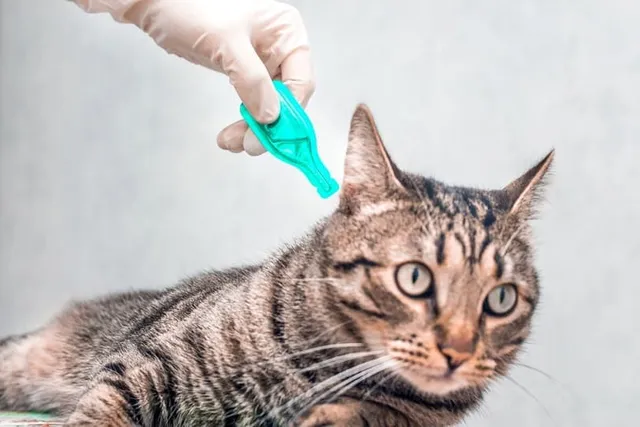
owner with gloves applying flea treatment to cat
Image Credit: Anastasiya Tsiasemnikava, Shutterstock

5. There are SAFE and UNSAFE Ways to Remove Ticks From Cats

If you find a tick on your cat, it is important to remove it quickly and safely. If you do not feel comfortable attempting this at home, your veterinary team will be happy to help you!

Here’s what to do:
  • Using fine-tipped tweezers, grasp the tick as close to your cat’s skin as possible
  • Slowly and firmly pull the tick straight up and away from your cat’s body
  • Maintain steady pressure until the tick releases (this may take a few minutes)
  • Confirm that you removed the entire tick, including the head, then place it in a sealed container filled with rubbing alcohol
  • Wash your hands thoroughly with soap and water

After removing the tick, monitor the area for signs of infection such as redness, swelling, tenderness, and discharge. Ask your vet if they want to submit the tick to a laboratory for identification, disease testing, or inclusion in a research study.

DO NOT:
  • Touch the tick with your bare hands
  • Attempt to remove the tick by covering it in petroleum jelly, nail polish, or by burning it with a match
  • Twist the tick (the head may break off and remain embedded in your cat’s skin)
  • Squeeze or crush the tick (this is likely to cause it to regurgitate and release any disease-causing agents it may be carrying)

After removing the tick, do not apply anything to your cat’s skin without consulting your veterinarian. This is especially true for products containing neomycin, which can cause severe allergic reactions in cats.


6. It Is Possible for Cats to Contract Certain Diseases After Being Bitten by an Infected Tick

Not all ticks transmit disease, but here are two examples of tick-borne diseases:

Lyme Disease (Borreliosis)

Lyme disease is probably the most well-known tick-borne disease in North America, but we do not currently have a clear understanding of how it affects our feline friends.

  • Experimentally infected cats have not shown signs of clinical disease
  • Multiple studies have identified seropositive cats (indicating previous exposure to the bacteria), but according to the most recent consensus statement published by the American College of Veterinary Internal Medicine (ACVIM) in 2016, there have not been any reported cases of naturally occurring Lyme disease in cats.
Here are some quick facts about Lyme disease:
  • Caused by Borrelia burgdorferi bacteria
  • Transmitted by Blacklegged Ticks
  • Most commonly identified in the Northeastern United States
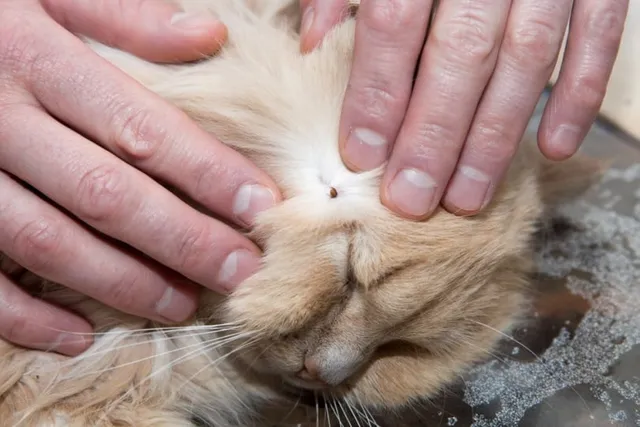
tick on cat's skin
Image Credit: thka, Shutterstock

Cytauxzoonosis

Cytauxzoonosis is a severe, rapidly progressing, and often fatal disease of domestic cats. Kitties living near wooded areas, particularly those populated by Bobcats (the wild reservoir species), are considered at risk.

Here are some quick facts about Cytauxzoonosis:
  • Caused by a protozoal organism called Cytauxzoon felis
  • Transmitted by American Dog Ticks and Lonestar Ticks
  • Identified in the Central, South Central, and South Eastern United States

Other tick-borne diseases identified in cats in the United States include Tularemia, Anaplasmosis, and Ehrlichiosis. Check out the Annual Pet Parasite Forecasts from the Companion Animal Parasite Council (CAPC) to learn which tick-borne diseases are most common in your area.


7. We Do Not Currently Have Any Vaccines to Help Protect Cats From Tick-Borne Diseases

A vaccine is available to protect dogs from Lyme disease, but a similar vaccine does not exist for cats. Fortunately, based on our current knowledge, cats seem to be at a much lower risk of developing clinical Lyme disease than dogs.

Research is ongoing to develop a Cytauxzoonosis vaccine, with promising results so far. Hopefully, in the future, this will be an option to protect cats living in high-risk areas.


8. You Should Only Use Tick Prevention Products for Your Cat That Your Veterinarian has Approved

Cats are extremely sensitive to many insecticides used in flea and tick preventives. This is especially true for products available over the counter and particularly if they are labeled for use on dogs.

Never use a dog flea and tick product on your cat!

The safest way to protect your cat from ticks is to use a veterinary product prescribed for your cat based on their age, weight, and overall health.

If ever you apply a flea and tick product to your cat, and they show signs of an adverse reaction (e.g., vomiting, difficulty breathing, tremors, seizures, etc.), contact a veterinarian immediately.

divider 1 paws

Conclusion

It is crucial to inspect your cat regularly for ticks and talk to your veterinarian about tick prevention, even if your kitty spends most of their time indoors. Remember to check yourself too! Ticks might be small, but the diseases they transmit can have significant health consequences.


Featured Image Credit: Lubo Ivanko, Shutterstock

Want content like this delivered to you?

Sign Up For Our Newsletter

News, insights, expert advice, and everything cat

* By submitting, you agree to our Terms & Conditions and Privacy & Cookies Policy.


How useful was this post?

Click on a star to rate (you can leave written feedback after clicking submit)

Help us improve Catster for pet parents!

Your feedback really matters.

What did you like about this post? Also how can we improve it?

Join the conversation

Leave a Reply

You’re very welcome to leave a comment or question. Please know that all comments must meet our community guidelines, and your email address will NOT be published. Let’s have a positive and constructive conversation.


Catster's Digital Magazine is Back!

Vet-approved health & behavior advice

Real cat stories & community features

Weird Cat Behaviors That Actually Make Perfect Sense

We have been sharing our lives with cats for thousands of years, yet we still find ourselves genuinely stumped by what they get...

The Dream of Talking to Cats Just Got Closer to Becoming a Reality

If you’ve ever wished your cat could simply tell you what they wanted, you’re not alone. From the meow that wakes you before...

Kizzy: The Feline Princess With a Purpose

We were first introduced to Miss Kizzy after she won a licky-treat challenge hosted by Professor Fluffovich, our resident feline research specialist. While...

Chatting With Sally About Mission Meow & Helping Cat Rescue Organizations Collaborate | Chatty Cattys, Episode 24

In this episode of Catster’s podcast, Chatty Cattys, Nicole and Dr. Karyn sit down with Sally Williams, the founder of Mission Meow, for...

More related

What Do Cats Really Think About Hugs? Vet-Reviewed Facts & Preferences

Most of the time, cats are irresistible. I can’t help but want to give my cats a big squeeze when they’re doing something...

6 Best Fresh Cat Food Delivery Services in 2026 – Reviews & Top Picks

If you’ve had your cat for a while, you’ve likely learned how to read the labels on pet food to look for nutrient-dense...

Can Cats Swim? Truths & Myths About Felines (Vet-Reviewed)

Cats are nimble, agile, and incredibly curious. However, they can also be accident-prone, especially when startled. They can be nervous, shy, and even...

Is It Ok to Put Ice Cubes in a Cat’s Water Bowl? Vet-Reviewed Pros & Cons

Most cat owners know that keeping a cat hydrated can sometimes be a challenge. Hydration is important for cats, and it’s even more...

Keep reading

14 Signs a Stray Cat Likes or Dislikes You (Vet-Reviewed)

Many people have a few cats that tend to hang up around their houses. Maybe they gather under your front porch or show up because they know they can get a good meal at your house. While some feral or...

stray cat sitting in the street

How to Get Your Cat to Stop Meowing: 4 Vet-Approved Methods

If any animal embodies the phrase “moving in silence like the G in lasagna,” it must be a cat. Unlike canines, felines are not perceived as overly vocal since being silent allows them to stalk their prey and pounce like...

Cat-meowing

How to Discipline a Cat for Biting: 9 Tips & Tricks

Cats are sweet and cuddly-looking creatures, but that does not mean they cannot have their fair share of behavioral problems. One common behavioral issue among cats is biting. There are many reasons a cat may bite, such as overstimulation, fear,...

playing with cat

Cat Twitching: Vet-Verified Signs, Causes & When to See a Vet

Cats have many strange behaviors, like the peculiar chattering sound they make when seeing a bird or a laser pen. But when we see our cat twitching while awake, it’s natural to be concerned and look for the underlying reasons...

Cat scratching his ear while laying on a bed

Do Cats Get Annoyed? 10 Vet-Reviewed Signs & What to Avoid

Cats can get annoyed just like humans, although they usually express it differently than us. Even the most loving and content feline can experience annoyance. It is one of the many emotions cats can feel. A cat will show clear...

An annoyed cat or angry cat with a ball toy.

Does Catnip Really Make Cats High? What You Need to Know!

It’s no secret that many cats love catnip. The plant, which is in the mint family, has a potent effect on felines, making them roll around, playfully bite things, and generally act like they’re high. But what’s really going on?...

Gray Cat Enjoying Fresh Catnip_Anna Hoychuk_shutterstock

Does Fish-Flavored Cat Food Cause Hypothyroidism? Vet-Approved Facts

Just like humans and dogs, cats can suffer from hypothyroidism, though it is quite rare. This endocrine disease is mainly due to the decrease in the secretion of thyroid hormones, which when in short supply, cause an imbalance in the...

cat eating food in the bowl

Why Do Cats Bring You Gifts of Toys or Dead Animals? Vet-Reviewed Behavior Guide

Everyone loves gifts, but your cat has a very different idea of what qualifies as a present than you do. If you’ve ever been the recipient of a dead bird, mouse, toy, or random object courtesy of your lovable kitty,...

tabby cat carrying a toy in its mouth

Love Cats? So Do We! Join the Catster Community

Stay informed with expert pet care insights delivered straight to your inbox! Discover professional guidance on animal behavior, feeding tips, trusted product picks, and much more.


Sign up for the Catster Email Newsletter

Stay informed with expert pet care insights delivered straight to your inbox! Discover professional guidance on animal behavior, feeding tips, trusted product picks, and much more.