Feline Herpes – Causes, Signs & Care (Vet-Approved Explanation)



In this article
Feline herpes is probably one of the most common chronic diseases in cats. After this virus infects your feline, there is no way to cure it. Instead, the focus shifts to supporting and caring for your feline. Luckily, with proper care, cats with feline herpes can live normal, long lives. However, they do require some special care and consideration.
Vaccines do exist for this virus and are widely recommended. However, despite this, cats are still infected all the time. Kittens may be infected before they can be vaccinated, for instance. Similarly, the vaccine does require regular boosters every 1 to 3 years, depending on the vaccine brand. If a cat isn’t boosted regularly, they can get sick even after the initial round of vaccines.

What Is Feline Herpes?
Feline herpes is more properly referred to as feline viral rhinotracheitis (FVR). It is caused by the feline herpesvirus type-1, which is why it is commonly referred to as feline herpes. Luckily, this virus can only infect other cats and isn’t known to pass from cats to any other animals. Only infections in domestic and wild felines have been detected.
However, this virus can infect any cat at any age. Young cats and those with underlying conditions are more likely to suffer complications than others. Simply put, this condition causes respiratory-like signs in cats. It is one of the most common reasons for conjunctivitis and upper respiratory disease and includes sneezing, runny eyes and nose, and sometimes coughing.
Cats become infected with feline herpes through exposure to virus particles in saliva, nasal, and eye secretions. A cat can become infected after coming into direct contact with another infected cat or through the sharing of food and water bowls or litter trays. The virus can also live in the environment but is quite fragile and usually survives only 1 to 2 days. It is also, luckily, easily killed by most disinfectants.
After being infected, cats usually show signs of the disease after 2 to 5 days. The cat is infectious before signs occur, allowing the cat to infect others before the owner even knows they are sick. Active infections usually last 10 to 20 days, though this varies widely.
Once a cat is infected, the vast majority of cats become a carrier as the herpes virus stays in the trigeminal ganglia (nerve tissue) for life. However, the virus is typically inactive, meaning that the cat won’t show signs or be infectious. Still, the virus can become active at any time, though this is usually caused by illness or stress. Usually, the cat will show more signs of the disease when their infection becomes active.
Not all cats show signs of the disease when they have an active infection.

What Are the Signs of Feline Herpes?
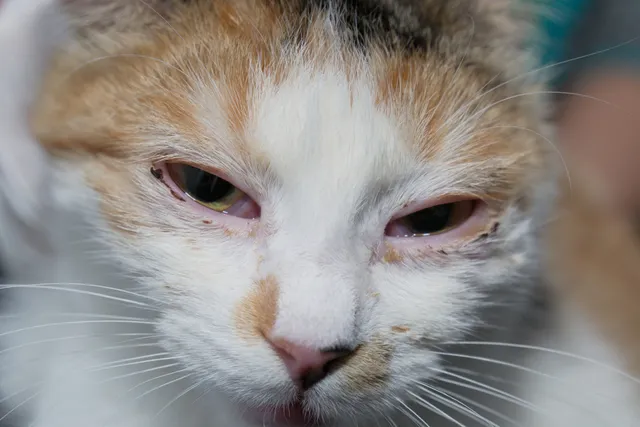
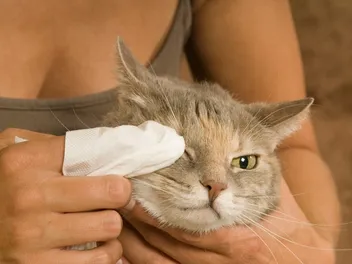
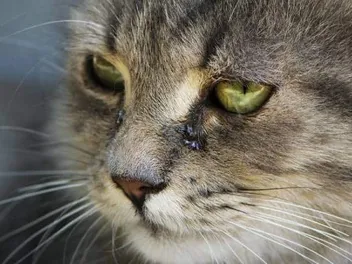
The typical signs of feline herpes involve the upper respiratory system, including the eyes, throat, and nose. Often, sneezing, congestion, squinting, and discharge may occur. Discharge may come from the eye, and it may be clear or pussy. As you might imagine, thick, pussy discharge requires regular cleaning.
Over time, inflammation of the cornea may occur. In some cases, this can develop into corneal ulcers. The eye can be permanently damaged by these and they should be taken seriously. The cornea may be scarred by these ulcerations. For this reason, it's important to take your cat to the vet as soon as you notice respiratory signs. While there isn’t a cure, there are many treatments for the symptoms of feline herpes.
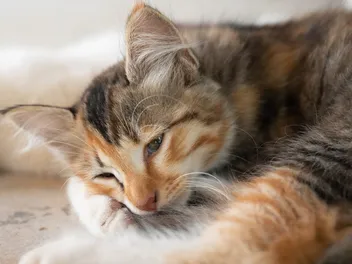
Other signs may occur, too. For instance, cats may not eat because they don’t feel good. Fever and lethargy also develop in other cats. Enlarged lymph nodes sometimes occur. However, this sign is often hard for the average cat owner to notice.
Cats are very good at hiding their signs. Felines evolved to hide their illnesses to avoid predators and even other cats from taking advantage of their condition. Luckily, though, upper respiratory signs are pretty easy to notice, as cats have a harder time hiding them.
If you are concerned about the health and well-being of your pet, seek veterinary advice for the best course of action.
How Do I Care for a Cat With Feline Herpes?
For much of the time, a cat with feline herpes won’t have any signs. Their infection will be “inactive.” However, cats who become infected with this condition once will always be carriers. Therefore, the disease may rear its head at any point, though it usually doesn’t unless the cat gets sick from another illness.
However, this does complicate other illnesses. Instead of just fighting a single illness, your cat may have to fend off their primary illness and feline herpes.
There is no cure for this condition. Therefore, treatment revolves around helping your cat manage signs. As the eyes are often bothered, eye ointments and drops may be used. Cats with recurrent infections may need antibiotics or antiviral medications. Secondary infections often require antibiotics as well.
L-lysine, an amino acid supplement, is now not believed to be useful in prevention or treatment of the herpes virus in cats.
Cats with serious nasal congestion may need a humidifier. A steamy bathroom is often suitable for this purpose, so you don’t need anything special for this treatment. 10–15 minutes several times a day is often enough to minimize discharges. You may also need to wipe your cat’s face and eyes with a tissue.
Herpes virus infection can cause damage to the internal structure of the nose and lead to chronic rhinitis.
Cats with respiratory infections often have decreased ability to smell. Therefore, they often have a decreased appetite, as they can’t smell or taste their food quite as well. For this reason, wet food is often recommended for these felines. It can also help them remain hydrated, as it includes much more moisture than dry food.
Rarely, cats may need hospitalization. Often, this occurs when the cat is dehydrated or has a severe illness.
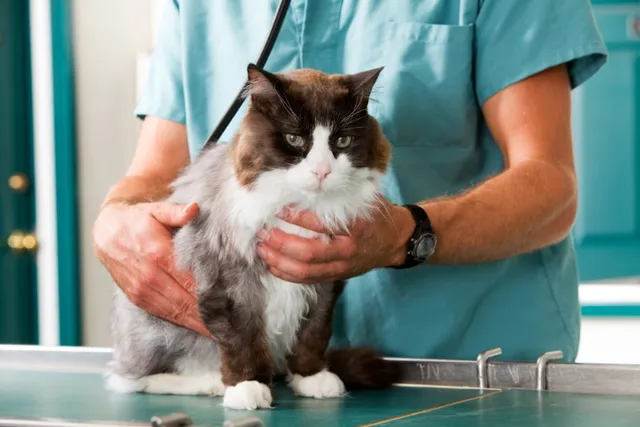
Your veterinarian should be your first port of call for treatment options for your cat.
Frequently Asked Questions (FAQs)
How long can a cat live with feline herpes?
Cats can often live their normal lifespan when the illness is treated. Of course, working with your vet is highly recommended. You’ll want to ensure your cat’s vaccinations are up to date and manage stress to reduce active illness lengths. While this illness does require a bit more management on your part, it won’t necessarily handicap your cat’s lifespan.
How serious is feline herpes?
By itself, feline herpes isn’t usually terribly serious. Complications can occur, but these are rare. Signs can be very mild or very serious, depending on the cat. Younger and older cats often have worse illnesses.
The main issue with feline herpes is that it often re-occurs with other illnesses. The cat will remain a carrier forever. The illness may pop up whenever a cat’s immune system is down, which often occurs when the cat is sick from something else.
Do cats recover from feline herpes?
Cats can recover from feline herpes. However, they will always remain carriers. The infection won’t be active all the time, though. In fact, many cats go years without an active infection. Still, the virus can pop back up whenever your cat is sick or stressed. Therefore, the best way to avoid this illness from becoming active again is to control stress and mitigate illness risk.
Can a cat with herpes be around other cats? How contagious is feline herpes?
Yes and no. Only cats with active infections are contagious. However, cats may not show signs when their infection is active, leading to them infecting other cats. Luckily, other cats in the household can be vaccinated, which reduces their chance of illness.
If you have a feline herpes-positive cat in your household, it's vital that you keep your other cats vaccinated. Your doctor may recommend a stricter vaccination schedule to reduce the chance of your cats getting sick. Vaccination cannot prevent infection with herpes virus but does reduce the severity of signs.
Conclusion
Feline herpes is a serious, chronic condition that is extremely infectious. Luckily, there is a vaccination for this condition. However, many kittens who are too young for vaccination become infected by their littermates or mother. This situation is very common in shelters and kennels.
This condition isn’t curable, but it can be managed with the proper steps.
Featured Image Credit: sophiecat, Shutterstock
Expert cat care, straight to your inbox
News, insights, and useful advice, delivered to you.

No spam — unsubscribe anytime.
By signing up, you agree to our Terms & Conditions and Privacy & Cookies Policy.
How useful was this post?
Click a star to rate. You can leave written feedback afterwards. (We read all feedback.)
Kristin is passionate about helping pet parents create a fulfilling life with their pets by informing them on the latest scientific research and helping them choose the best products for their pets. She currently resides in Tennessee with four dogs, three cats, two fish, and a lizard, though she has dreams of owning chickens one-day!