Cat Ear Communication: Ear Positions & Vet-Verified Meanings


In this article
Sometimes, you really want to know what your cat is thinking and feeling. Unfortunately, our favorite felines can’t speak to us to tell us what’s going on in their heads. However, they can still communicate with us; they just mostly do it via body language.
Their ears, in particular, are a communication method they use. A cat's ear position can tell us a lot about what kind of mood they're in, and this communication can even help felines survive! Ready to learn how your kitty is feeling?
Here’s a look at what the position of a cat’s ears indicates and how communicating with their ears helps them thrive.

How Cat Ears Work

Before we talk about how cats communicate with their ears, you should know more about how feline ears work.
Did you know that felines have 32 muscles in the ear? That’s a lot of muscles (way more than we have!). All those muscles enable our kitty friends to swivel their ears 180 degrees, which is quite an expansive range of motion, and the ears are able to move independently of each other.
The outer ear (pinna), as well as being involved in communication, is shaped to capture sound waves and funnel them through the ear canal and to the eardrum. They can turn their ears back for example to listen to a sound coming from behind them.
Cats can hear higher pitched sounds than humans, hearing at frequencies as high as 64,000 Hz. They can also hear sounds at greater distances, four or five times further away than humans can.
This vast range of motion and ability to hear higher frequencies and from further away, not only helps your cat communicate the kind of mood they’re in, but also allows them to locate their prey and be safer from potential predators.

Cat Ear Positions and What They Mean

Another way a cat’s ears help them with survival is in how they are positioned. Communication between cats and others can go a long way in keeping the cat safer. Here’s a look at how a cat will position their ears and the meaning of each position.
1. Neutral

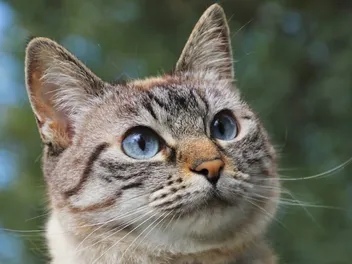
Check out your kitty the next time they’re hanging out with you and just being a cat. When felines are relaxed and happy, their ears are put into what is known as the neutral position. In most cases, this neutral position will have the kitty’s ears facing forward a bit. This position is merely an indication that your pet is happy and chill. Take advantage and get some cuddles in!
2. Upright

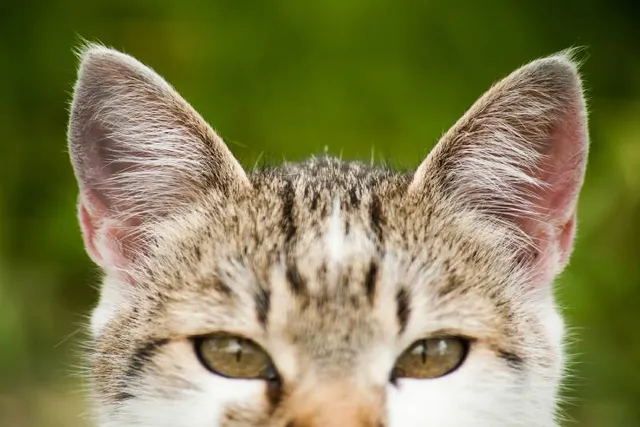
If you notice that your kitty’s ears are upright in a straight up position, it means your pet is on alert. Something has caught your cat’s attention, and they’ve positioned those ears to listen as intently as possible. This isn’t an unusual ear position for our curious feline friends, especially those cats that like to patrol the house.
Your pet could also have their ears in this position while playing or stalking a bug or mouse. You may also see kitty’s ears swivel from side to side. It’s simply a way to help them receive as much auditory info as possible.
This is an ear position that would likely be highly beneficial in the wild, as being on alert and listening intently could keep a cat safe!
3. Mismatched

Ever seen your cat have one ear up and one ear down, so the ears are wholly mismatched? Most times, this occurs when the kitty is confused by something (you may even see them tilt their head to one side). Your pet is probably trying to listen to two sounds simultaneously and figure out what each is and where they are coming from.
However, listening isn’t the only reason a cat’s ears may fall into this mismatched pattern. This could also occur if your cat is experiencing health issues with their ears, like ear infections. So, you’ll need to check the rest of your pet’s body language to determine if they’re simply confused by what they’re hearing or dealing with a painful ear.
4. Twitchy
A feline’s ears can twitch for a couple of reasons. If they’re using those twitchy ears as a communication method, though, it probably means that kitty is on alert or agitated by something. It could be that they’re hunting something, or they’ve heard something that intrigues them, but they’re having trouble locating it. That twitchiness is your pet trying to find the noise they want so they can decide what to do next (which could be pounce, fight, or flee).
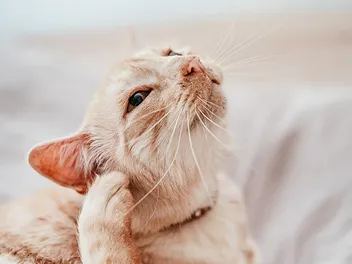
But if you notice that your kitty’s ears twitch a lot and the cat is also scratching or pawing at their ears, they may have something wrong with them, like ear mites, so a visit to the vet is in order.
5. Airplane Mode

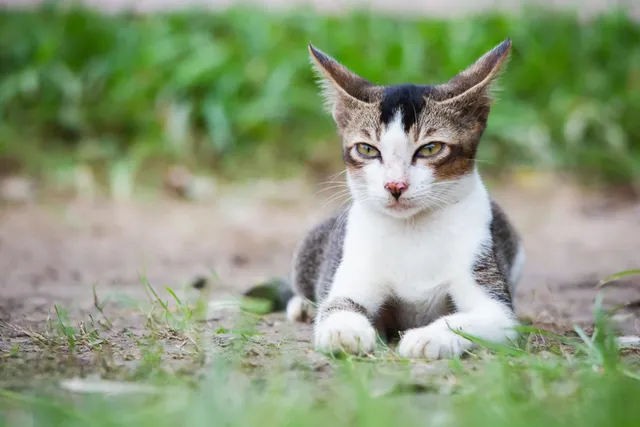
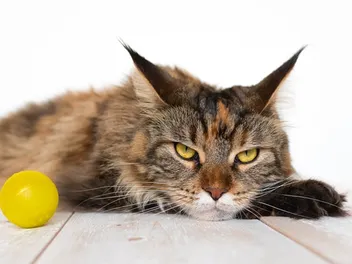
If your pet’s ears are in “airplane mode” or flattened and sticking out to the sides so they look like the wings of a plane, the cat is definitely communicating strong emotions. Usually, this means your cat is nervous, anxious, or scared, which could be a precursor to them becoming aggressive. Something has upset your cat, and airplane mode ears mean it’s time to back off and give them some space. If you don’t, you could get scratched or bitten, or your pet might hiss at you.
6. Out and Low

Are your kitty’s ears being held out to the side and down low? Then, they could be communicating that they’re feeling unwell. It’s not in a feline’s nature to let others know when they’re feeling ill, so you often have to look closely at their body language to determine how they’re doing.
In the wild, a feline hiding when they aren’t feeling well helps them to be less of a target to predators, so this is an instinctual behavior—even when they’re safe in your home. So, if your pet’s ears are in this position, look and see if they are exhibiting signs of being unwell, such as lethargy or lack of appetite. Kitty might need to see a vet!
7. Flat Ears
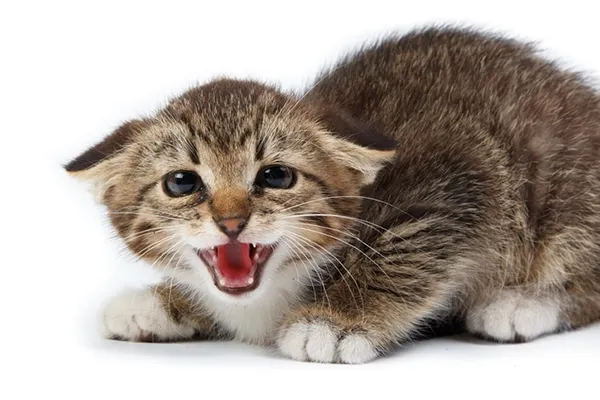
If you’re a cat parent, you know what it means when your cat’s ears are flat to their head! Yep, this is a clear communication that your pet is angry, and everyone needs to back away immediately. If not, things could quickly get aggressive.
And, if you have more than one cat in your home, you may see this communication when your pets are wrestling around. This is an essential communication for survival because it indicates to the second kitty that playtime is done and things are about to get real. If the second cat doesn’t back off, someone could get injured. If you see a cat’s ears flatten during play, keep an eye on them and discourage any aggressive behavior or harsh tussling.

Conclusion
There’s a lot more to feline communication than just how their ears are used, but a cat’s ear position is absolutely a part of communication. Your kitty’s ears can tell you just how they’re feeling and whether they can be approached. This form of communication also helps with survival, as certain ear positions can help the cat stay safer from predators or warn others to back off before a fight.
Learning to read a cat’s communication with their ears and the rest of their body language is important to forging a good bond with your pet!
See also: Ear Pinna in Cats
Sources
Featured Image Credit: Alexander_Evgenyevich, Shutterstock
Expert cat care, straight to your inbox
News, insights, and useful advice, delivered to you.

No spam — unsubscribe anytime.
By signing up, you agree to our Terms & Conditions and Privacy & Cookies Policy.
How useful was this post?
Click a star to rate. You can leave written feedback afterwards. (We read all feedback.)
Misty Layne lives out in the woods in small-town Alabama with her two Siamese cats —Serafina and Jasper. She also has an array of stray cats, raccoons, and opossums who like to call her front porch home. When she’s not writing about animals, you’ll find her writing poetry, stories, and film reviews (cats, by far, her favorite writing topic, though!). In her free time, Misty enjoys chilling with her cats, playing piano, watching indie and foreign films, photographing abandoned places, and catching up on her never-ending TBR list.