Triaditis in Cats: Causes, Signs & Treatments (Vet Answer)

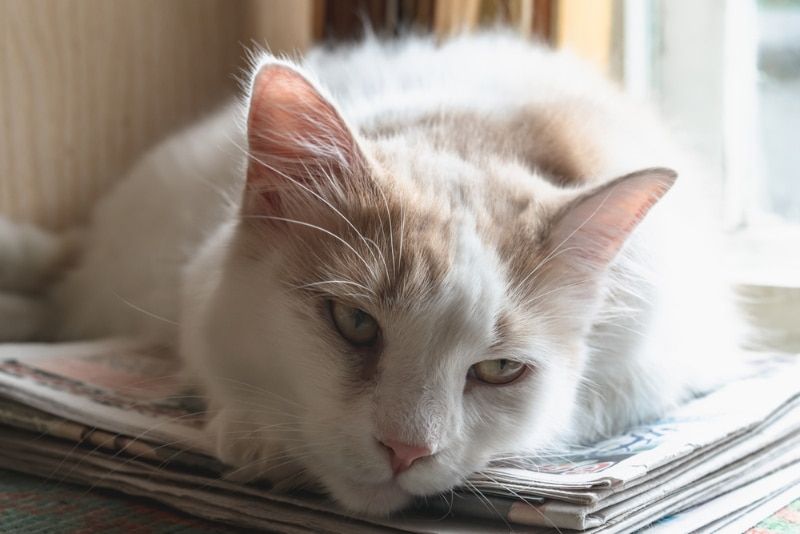
Feline triaditis is a phenomenon that occurs when there are inflammatory diseases affecting three different organs in your cat's body at once. The organs affected are the pancreas, the liver, and the intestines. This condition is not to be confused with triaditis in humans which refers to inflammation of portal triads in the liver.
Feline triaditis, as the name suggests, only affects cats. Read on below to find out more.

What Is Triaditis in Cats?
Feline triaditis is the presence of pancreatitis, inflammatory bowel disease, and cholangitis occurring simultaneously. It has a reported prevalence of 17%–39% in ill referral patients1.
The three conditions triaditis in cats involves are:
- Pancreatitis: This occurs when the pancreas becomes inflamed. The pancreas is a small, but important organ that sits on your cat's abdomen. It produces enzymes that are vital for digestion. Pancreatitis can be a serious and life-threatening condition if your cat does not receive the necessary treatment promptly. Pancreatitis can be caused by injuries or trauma to the abdomen, bacterial infection, and diabetes. Often, the cause is unknown.
- Inflammatory Bowel Disease: This is when your cat's intestines are chronically inflamed and irritated. The disease involves inflammatory cells moving into the walls of the gastrointestinal tract, causing them to thicken. This means the digestive tract is unable to absorb and digest the food your cat eats. Inflammatory bowel disease can also be linked to bacterial infections. There are also thought to be genetic components.

What Are the Signs of Triaditis in Cats?
The clinical signs of triaditis in cats vary greatly depending on the severity of the disease and how it is progressing. Some cats will show no clinical signs at all which can make diagnosis tricky.
Clinical signs are often generalized and non-specific. Common signs include:
- Lethargy
- Reduced appetite
- Weight loss /poor condition
- Vomiting
- Diarrhea
- Jaundice (accumulation of yellow pigment in the blood and tissues)
- Pain when being picked up
- Poor coat condition
- Isolating and being withdrawn
- Increased thirst
- Increased urination
- Swollen stomach
As it can be challenging to diagnose, it is very important that owners take their cats to their vets if they see any of the clinical signs mentioned above. The three disease processes have a lot of similar clinical signs, and they often overlap. Some of the signs do relate to one specific disease that can help narrow things down.
Is your cat presenting any of these signs? We suggest you speak with a vet online.
What Are the Causes of Triaditis in Cats?
The true cause of triaditis is not fully understood currently. There are thought to be several different components contributing to the cause including physical, autoimmune, and infectious factors. It is not yet known if the organs involved are all affected by different disease processes or if it is the same disease that causes triaditis.
It is thought that the anatomy of the feline gastrointestinal tract plays a role in the development of the disease. Cats have a relatively short, small intestine. They also have a high bacterial load. Cats are unique in that their pancreatic duct is attached to the common bile duct before entering the duodenal papilla. These three things combined all increase the risk of inflammation and bacterial reflux. Inflammation may be caused by bacteria in the blood or from elsewhere in the body.
As triaditis involves three different organs, there are lots of causes for the disease. Some of the more common causes for each disease are listed below:
- Pancreatitis: Certain types of food/diets, exposure to infectious diseases such as toxoplasma gondii, bacterial infections, injuries/trauma to the abdomen, parasites, and some medications.
- Cholangitis: Bacterial infections, immune-mediated disorders, hepatic lipidosis (fatty liver disease) toxin exposure, endocrine disorders such as diabetes and hyperthyroidism, liver shunts, enteritis, and pancreatitis.
- Inflammatory Bowel Disease: Food allergies, parasites, bacterial infection, exposure to stress, immune-mediated disease, genetic factors, vitamin deficiencies, toxin exposure.

Diagnosis of Triaditis in Cats
Diagnosis of triaditis in cats can prove to be difficult. It consists of three separate conditions; however, they share many of the same clinical signs. Your vet will start by taking a full history and performing a physical exam. They will take routine blood and urine samples for analysis. Your vet may request more specific blood tests to help determine if there are problems with the pancreas. These include Spec-fPL which measures increases in pancreatic enzymes and Trypsin-like immunoreactivity which is used to detect exocrine pancreatic insufficiency.
Your vet may also want to measure the cobalamin in your cat's blood as this assesses your cat's B12 levels which can be reduced in cats with inflammatory bowel disease. Depending on what sort of clinical signs your cat presents with, they may require a fecal sample too.
Your vet may request X-rays and ultrasound scans of the abdomen to assess the liver, intestines, pancreas, and biliary system. More advanced imaging such as CT and MRI can be helpful in identifying certain abnormalities.
The only way to definitively diagnose the condition is by taking tissue biopsies. This is not often done as it is an invasive procedure that may not be appropriate to carry out on a cat that is already unwell.
How Do I Care for a Cat with Triaditis?
Treatment for triaditis can be complicated as all three conditions need to be addressed. Some treatments will overlap. The medication and supportive care required also depend on the severity of the disease and the clinical signs being displayed. The treatment for pancreatitis usually involves pain relief, intravenous fluid therapy, and anti-sickness medication.
Treatment for cholangitis normally includes antibiotics, anti-sickness medication, pain relief, intravenous fluid therapy, and liver protectants. Treatment for inflammatory bowel disease usually involves dietary changes, antibiotics, anti-sickness medication, intravenous fluid therapy, steroids, immunosuppressants, and vitamin supplements.

Frequently Asked Questions (FAQ)
What Is the prognosis for cats with triaditis?
The prognosis for cats with triaditis largely depends on the severity of the disease and how quickly a diagnosis is made so treatment can be initiated. Most cats make a full recovery from mild cases of triaditis. Some may have long-term effects, or they may have recurring episodes. Inflammatory bowel disease is usually a chronic issue that requires lifelong management. The treatment and prognosis for the individual diseases are dictated by the underlying causes as well.
Can triaditis be passed on to other cats or humans?
Depending on the underlying cause of the diseases associated with triaditis, certain pathogens can be passed onto humans or other cats. Bacteria can be spread between cats and humans. Viruses can be passed between cats, especially if they have not been vaccinated. The parasite infection Toxoplasmosis is a zoonotic disease which means it can be passed from cats to humans.

What is the life expectancy of a cat with triaditis?
The life expectancy of a cat with triaditis does depend on the severity of the disease. Some cats with only mild clinical signs have a very good prognosis, and there will be no long-term effects. Cats with severe disease have a poorer prognosis and have lifelong issues that can be debilitating.
Can you prevent triaditis in cats?
Some of the causes of triaditis can be prevented, for example by having your cat vaccinated. Other causes are not preventable but there are things owners can do to minimize the risk of their cat developing triaditis. Keep your cat in the best health possible by attending vaccination and check-up appointments, using only anti-parasite medication that has been recommended by your vet, and keeping good hygiene practices.
Avoid using toxic substances in your home. Reducing stress and not changing your cat's diet abruptly may also help.
Conclusion
Triaditis in cats can be a complex and challenging condition to diagnose and treat. Clinical signs for the three different conditions can overlap so if you see any of the signs discussed above, it is very important that you take your cat to the vet immediately to have them checked out. Medical management requires treatment for all three of the diseases.
Depending on the severity and promptness of treatment, cats can go on to make a full recovery and live a normal life.
Sources
Featured Image Credit: Nata Aleks, Shutterstock
Expert cat care, straight to your inbox
News, insights, and useful advice, delivered to you.

No spam — unsubscribe anytime.
By signing up, you agree to our Terms & Conditions and Privacy & Cookies Policy.
How useful was this post?
Click a star to rate. You can leave written feedback afterwards. (We read all feedback.)
Dr. Emma Chandley, BVM MRCVS (Veterinarian)
Dr. Emma is an experienced vet who is happy to share her expertise and knowledge about cats with readers. Her passion is surgery but she will happily talk about anything animal-related. Dr. Chandley graduated from The Royal Vet College and since then she has worked in general practice in Great Britain. Dr Chandley has completed a postgraduate certificate in Small Animal Surgery and has also gained Advanced Practitioner status in the same discipline. She enjoys developing her skills in animal behavior, nutrition, and clinical pathology as well.