How Bad Are Fleas in Washington State? Vet-Verified Facts & Considerations


In this article
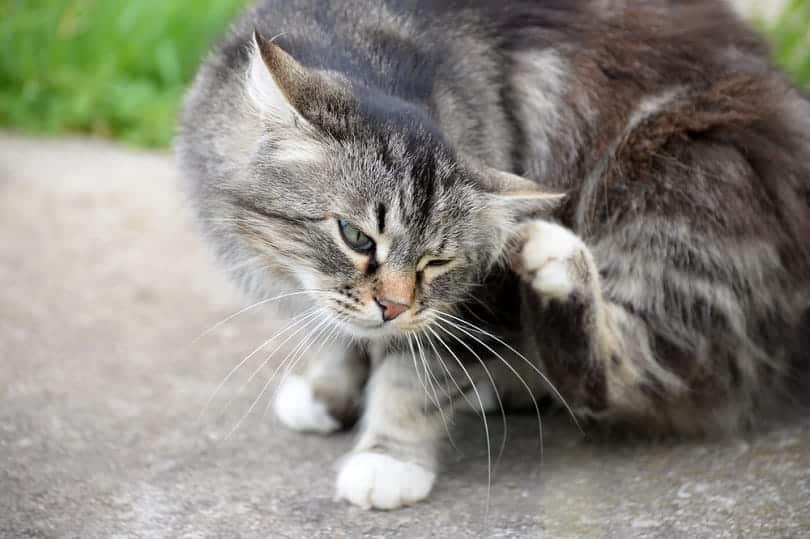
If you live in Washington State with a cat that loves the outdoors, you must educate yourself about fleas. The milder weather throughout much of Washington can make fleas a year-round problem, so much so that even your indoor cat could need protection. Read on so you know what to look for and what to do if you find fleas on your cat.

What Are Fleas?
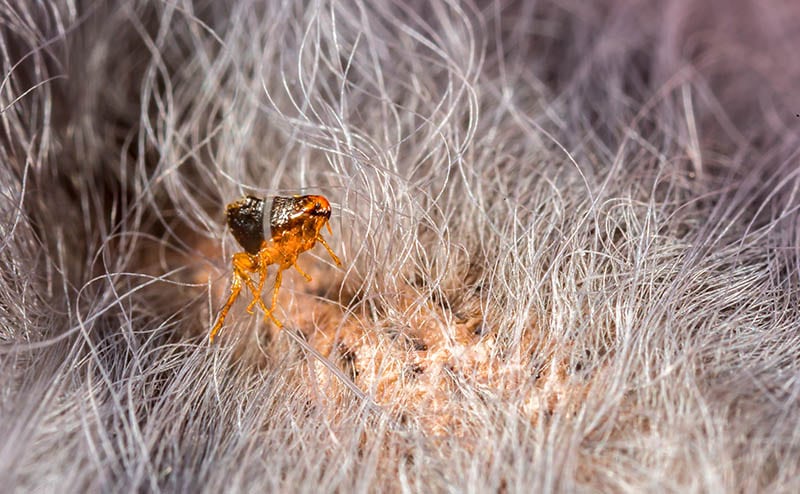
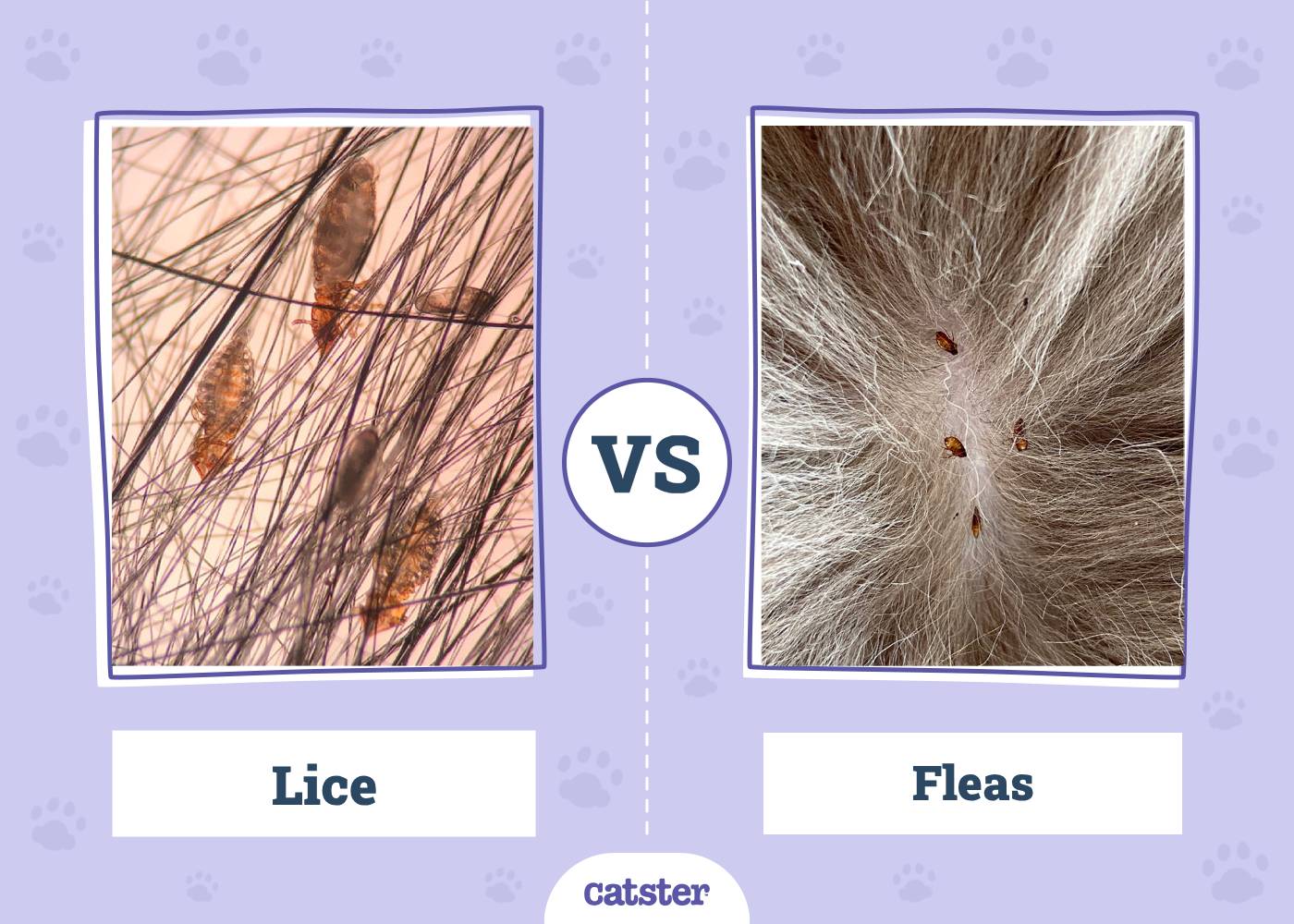
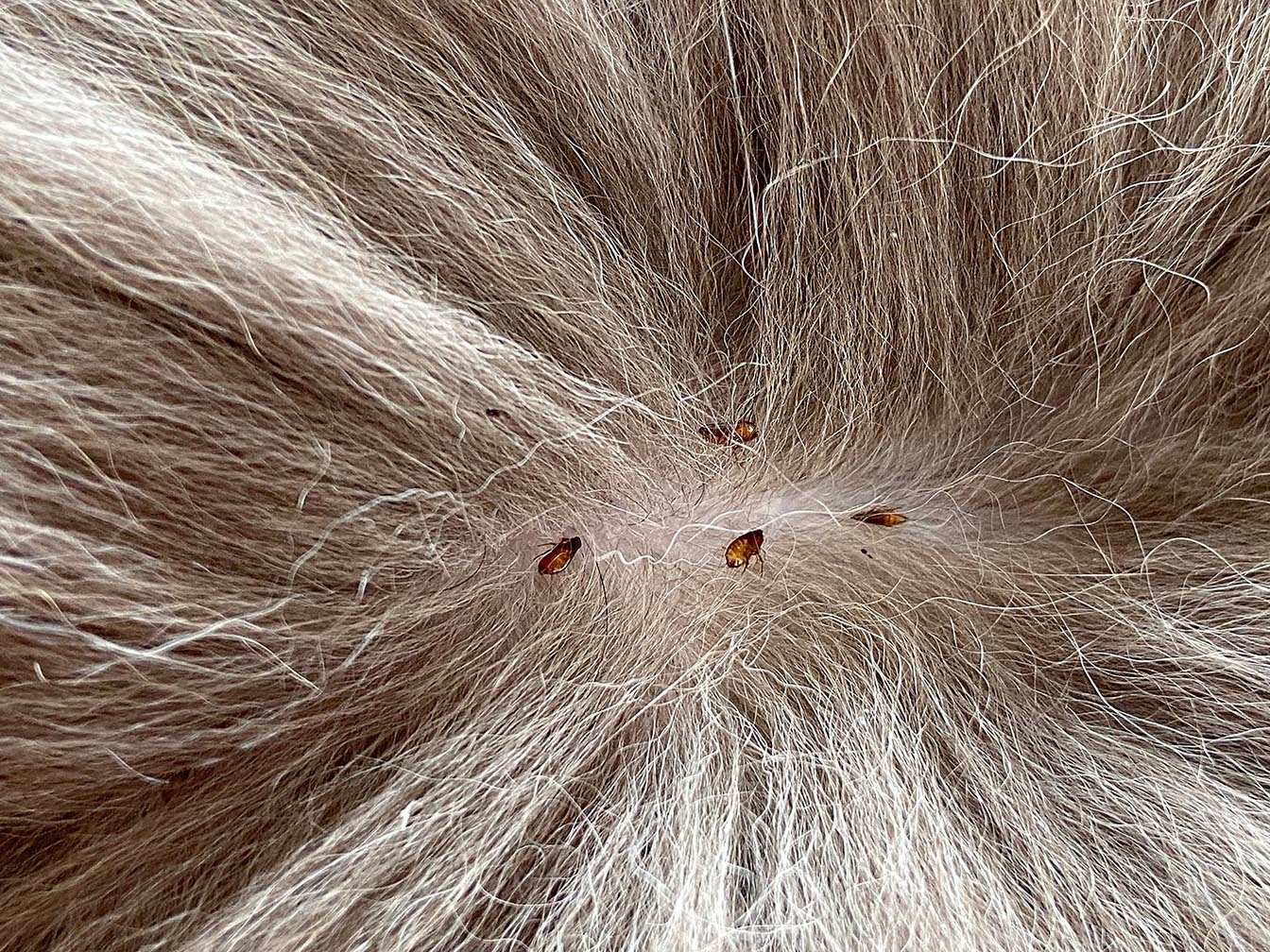
Fleas are insects that feed on the blood of warm-blooded creatures like mammals and birds. Cat fleas (Ctenocephalides felis) are most often found in cats and dogs, though they’re also found on other mammals. These insects can hitch a ride on your pets and jump as far as six inches or more to latch onto your clothing or shoes.
When Are Fleas a Problem in Washington State?
Fleas are the biggest problem in Washington State during the spring, summer, and fall months as they thrive in warm, humid environments. It rains often throughout much of Washington State (and the Pacific Northwest as a whole), creating the perfect breeding ground for fleas. Their numbers increase when the temperatures are warm, and they may seek refuge indoors during the cooler months of the year. It is entirely possible to deal with a flea infestation year-round in many areas of Washington State as the temperatures don’t get and stay cold long enough to kill them off. So, cat owners should consider giving a flea preventative all year and familiarize themselves with the signs of a flea problem to nip it in the bud.
Why Are Fleas a Problem in General?
Fleas feast on blood, so if one were to bite an animal infected with a bloodborne disease, the disease could then be passed on to whatever else the flea bites. This includes your beloved pets and, yes, even you.
You might be surprised to learn that fleas were actually what caused the bubonic plague, which killed millions of Europeans between 1346 and 1353. According to the Centers for Disease Control (CDC), the bubonic plague still affects around seven humans every year in the United States.1 The condition can also impact virtually any animal, including cats and dogs. While the plague is rare and death from it has been drastically reduced thanks to modern antibiotics, we feel it’s still something cat owners should be aware of, as not everyone takes fleas as seriously as they should.
Aside from being the cause of a deadly plague, fleas wreak havoc on your home and pets in other ways, too. They can:
- Cause hair loss and rashes in cats due to extreme itching, biting or flea allergies
- Cause anemia in severe cases
- Transmit parasites such as tapeworms
- Transmit other diseases, such as Bartonella
What Are the Signs of Fleas on Cats?
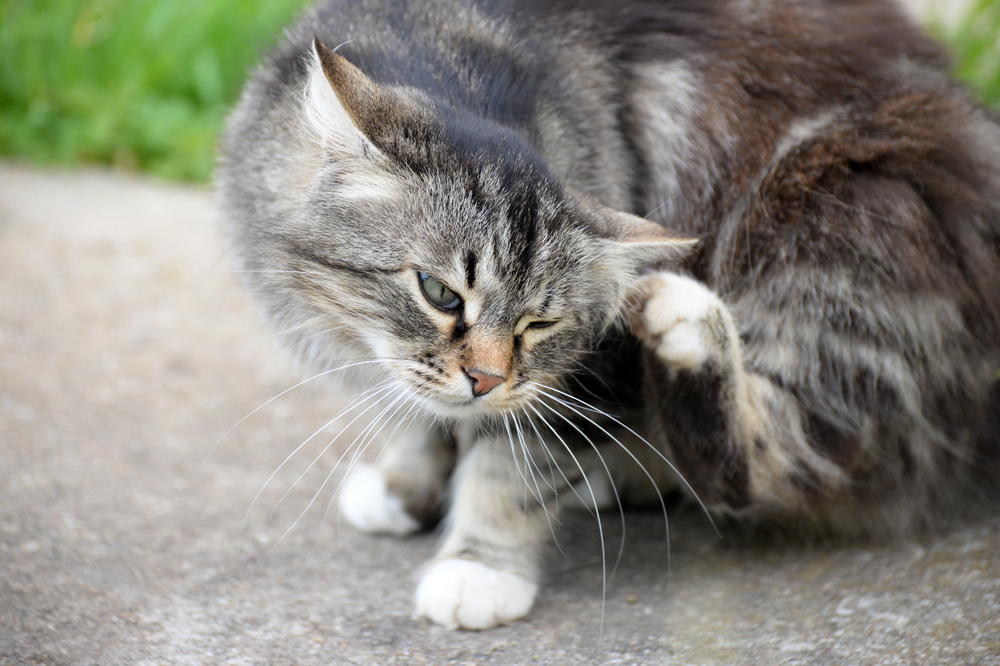
The most common signs that your cat has fleas include:
What Can Be Done to Prevent Fleas?
The best way to prevent a flea infestation is by using a high quality flea preventative. There are many options available, so ask your veterinarian for recommendations. You can also reduce the likelihood of your cat coming into contact with fleas by keeping them indoors. However, if this isn’t a realistic option for you, you must commit to inspecting your pet for them regularly.
There are also things you can do as a homeowner to prevent fleas from invading your spaces. First, keep a mowed and raked lawn to discourage animals that could potentially be carrying fleas from coming into your yard. Repair any broken window screens and gaps in your doors, walls, and foundations, as they can be entrances for other flea-carrying animals.

What Can Be Done to Address Fleas?
If your cat already has fleas, you’ll need to treat them as well as any area of your home that they frequent.
Treating Fleas on Cats
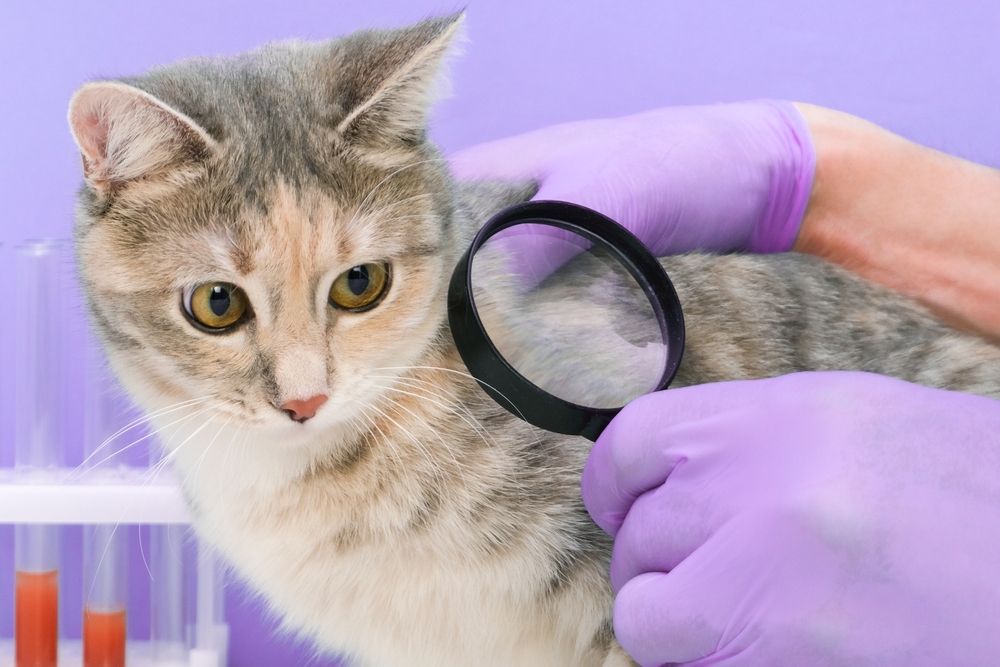
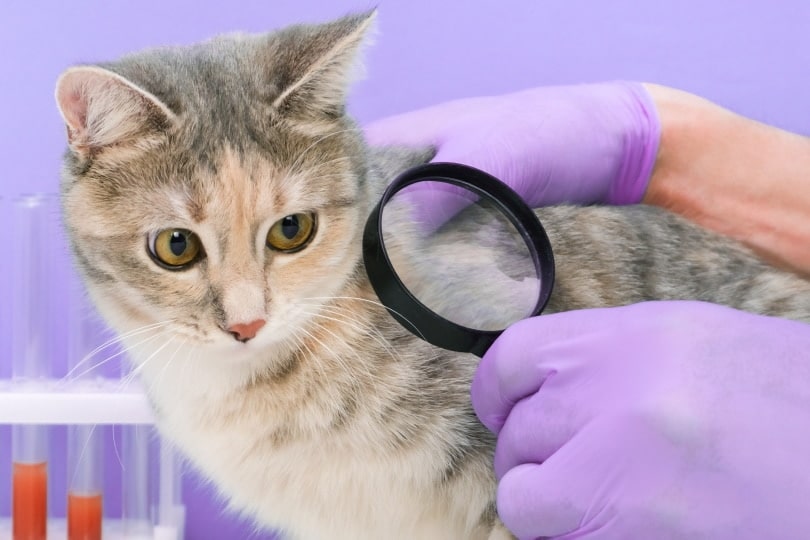
Fleas tend to gather on a cat’s neck and tail area, so start looking for them there. Use a flea comb to get rid of most of the bugs, their feces, and any dried blood. Once you’ve removed the fleas, kill them by putting them in hot, soapy water.
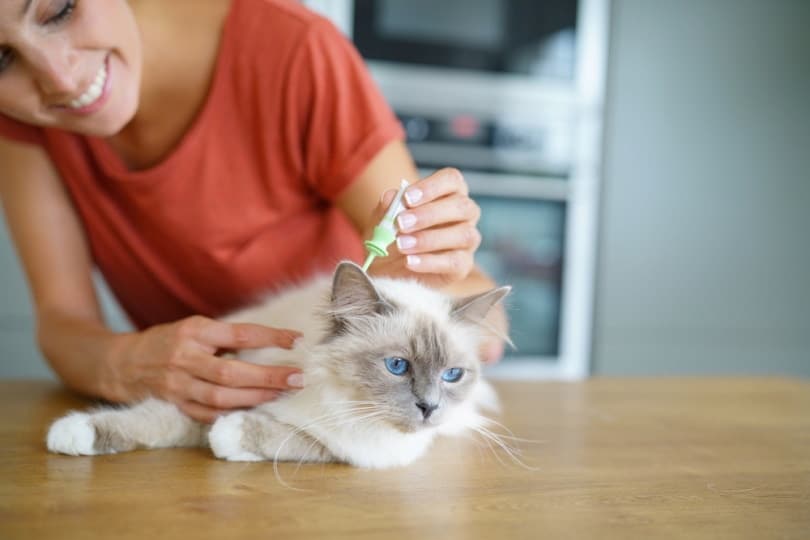
We also recommend asking your veterinarian about spot-on and oral treatments to treat and prevent fleas from re-infesting your pet. It’s best to get a prescription from your vet and avoid over-the-counter medications as they might not be as effective or safe, and the formulas are designed for specific pets, sizes, and ages. Treating with the wrong formula can have bad side effects and even be fatal. Be sure to treat all pets in your household whether they are showing signs of fleas or not.
Treating Fleas in the Home
Once you’ve dealt with the fleas on your pet, you’ll need to do a thorough cleaning to ensure they’re all removed from your home.
Vacuum your carpet, rugs, and furniture thoroughly. Pay close attention to the places your cat spends a lot of their time (e.g., the sofa). You may also want to rent a steam cleaning machine to do your carpets.
Toss your pet’s bedding into the washing machine and run it on the hottest setting possible. You should do the same to your own sheets and bedding. This is something you’ll want to keep doing every two to three weeks to ensure all the flea eggs are gone.
If your flea problem persists, we recommend calling a licensed pest control business in your area. They’ll know exactly what type of treatments work best for the fleas you’re dealing with.
Final Thoughts
Fleas can be a real problem for cat owners living in Washington State, especially during the warmer months of the year. Don’t be lulled into a false sense of security thinking you and your cat will be safe in winter, though, as adult fleas and eggs can survive in the mild climate and can be found on vermin and pets throughout the winter.
Sources
Featured Image Credit: Maja Marjanovic, Shutterstock

Expert cat care, straight to your inbox
Vet-reviewed advice, behavior tips, and the best of Catster. Free, and you can unsubscribe anytime.
By signing up, you agree to our Terms & Conditions and Privacy & Cookies Policy.
For Chantelle, writing and animals are the two driving forces in her life. Growing up on the Canadian prairies surrounded by pets, she now shares her home with five cats, two guinea pigs, and a bearded dragon. Chantelle, her husband, and their child pride themselves on being dedicated pet parent, even spending a fortune on wall-mounted cat shelves to provide their cats with an indoor jungle gym. When she's not snuggling with her cats or photographing their humorous moments, Chantelle is exploring the Rocky Mountains, rewatching her favorite Netflix series, and reading up on various random subjects.
Join the conversation
Ask a question, share your story, or send private feedback.