Why Is My Cat Peeing Blood? Our Vet Explains Causes, Treatments & FAQ

In this article
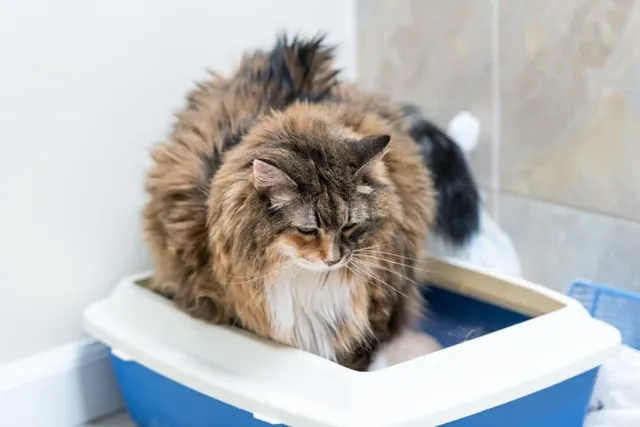
Imagine going to clean out your cat’s litter box and suddenly witnessing your cat urinating out what appears to be blood! As an owner, it can be shocking and rather alarming to discover your kitty showing blood in their urine. But why is my cat peeing blood? While there could be various causes for this, ranging from mild to serious injury or disease, it is not typically considered normal in a healthy cat. In this article, we’ll discuss some possible reasons for bloody urine and what this may mean for your beloved feline friend.

Normal vs. Abnormal Cat Urine Appearance
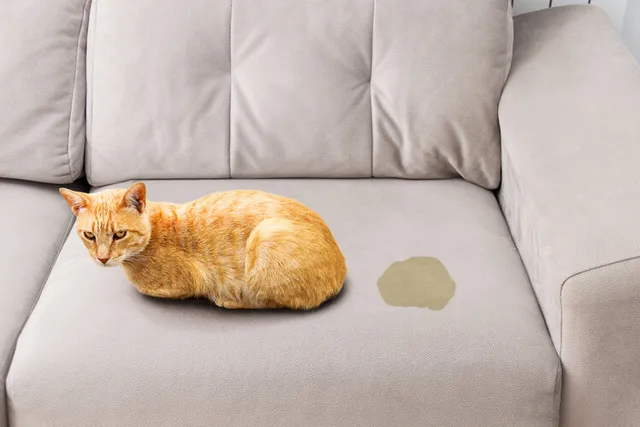
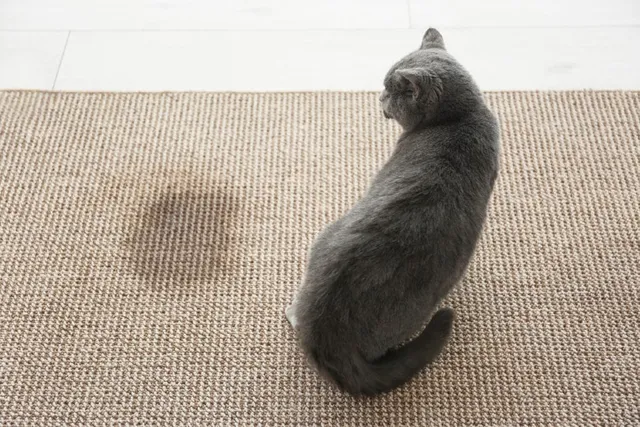
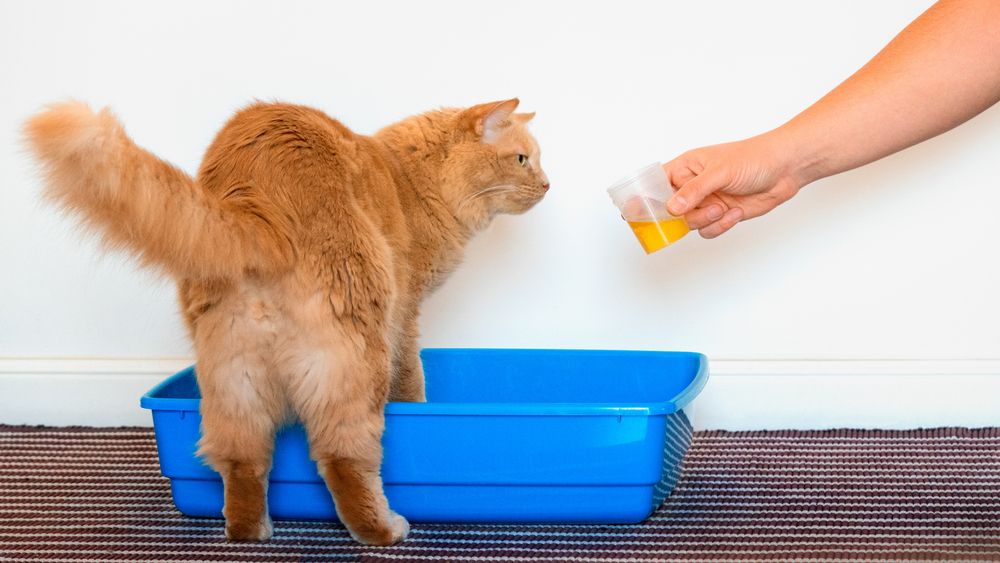
Typical cat urine is a yellowish hue that can range from a mild light yellow to a darker yellow color if the urine is more concentrated. Any other hue, such as a pinkish tinge to red to a brownish-red color, would be atypical and should be investigated.
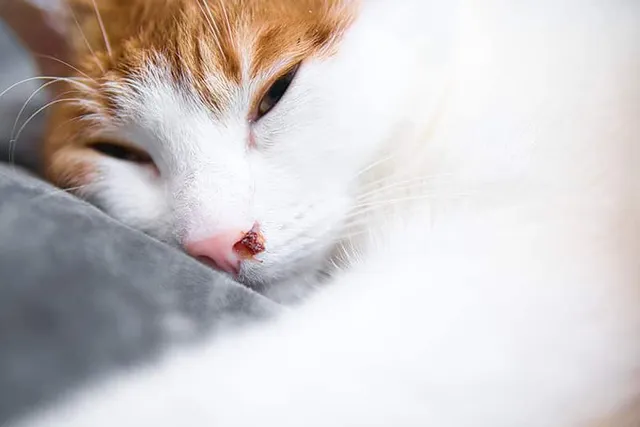
Hematuria is the medical term for blood in the urine. Pinkish or red hues indicate gross hematuria has occurred, which means that there are enough red blood cells present in the sample to be visible to the naked eye.
Why Is My Cat Peeing Blood?
My cat is peeing blood but acting normal. Why is this? Unfortunately, there is not a simple, one-size-fits-all answer here. Because blood in the urine is a non-specific sign, there are many reasons to consider why blood may be present in a cat’s urine. The blood could be coming from the urinary tract itself, including the upper urinary tract (kidneys and ureters) or lower urinary tract (bladder or urethra), or it could even be from non-urinary causes, such as the reproductive system.
Some causes of hematuria could be:
While this is a long list, some of the more common causes of blood in cat urine might include stones (calculi) in the urinary tract, feline idiopathic cystitis (FIC), urinary tract infections, urinary blockage, trauma, or cancer.

Signs Seen With Hematuria
Additional abnormal signs in conjunction with hematuria to be on the lookout for could include:
Other urination signs:
Other systemic illness signs:
Aside from the hematuria, even if a cat is otherwise acting normal, they should still be seen by a veterinarian. Cats are “the great pretenders” and often can hide illness and disease until, well, it’s much more serious and they are really not doing well.
Treatment of Hematuria
What Will Occur at the Veterinary Office
A complete history and physical exam are expected and will often help determine the next recommended steps. The timing of when the blood is present during the urine stream, coupled with the history and physical exam findings, can also be a clue as to the origin of the blood. This means that localizing the source of the blood to a specific area (such as the bladder, reproductive tract, etc.) may be more likely by seeing blood only at the start of urine voiding versus blood during all of urination versus blood only at the tail end of voiding.
Urine collection samples may be obtained via cystocentesis, catheterization, or free catch (collecting urine in a sterile container while the pet is voiding on their own). A urinalysis which uses urine to conduct several different tests can include the urine appearance, concentration, pH, chemical analysis (which checks for several different properties, such as blood, protein, or glucose) and cells or solid material in the urine itself. Additional common lab work also includes blood work that looks at internal organ function as well as the makeup of cells in the blood. These can give clues at times as to what may be going on internally.
Abdominal radiographs (X-rays) and/or ultrasound can help to see if there are certain types of stones present, determine kidney size and shape, or if there is an abnormal mass present. Further testing may include urine culture and sensitivity testing, blood coagulation profile, endoscopy (small, scoped camera that can travel to see internal anatomy), biopsies, or even abdominal exploratory surgery.

For Resolution of Signs
The treatment prescribed to a cat with hematuria will depend on the exact cause. For example, a cat with a urinary tract infection would require antibiotics, while a cat with bladder stones may get a specific medicated diet and/or require surgery. For cats that have FIC, decreasing stress is a large part of treatment, which can include medication for pain and anxiety as well as litter box maintenance changes and environmental enrichment.
Cats with cancer may need surgery as well as radiation and/or chemotherapy to help give them a chance at remission. Overall, once a reason for your cat’s hematuria has been identified, the treatment will be tailored to that specific cause and your veterinarian will be your partner in this endeavor.
Tips for Care
As discussed, while there can be many causes for hematuria, some tips that may help your cat when they are peeing blood include the following.
- Pay attention to your cat’s routine. Note changes, as these may be medically relevant to be discussed with your cat’s veterinarian. For example, seeing blood in the urine deserves medical attention promptly but very little to no urine output is an absolute emergency.
- Provide a clean litter box, (clean one or two times a day) with a substrate and set-up that your cat prefers. There should be one more litter box than the number of cats present, and these should be interspersed throughout the home. For example, if you have two cats, don’t put all three litter boxes close to each other in the same room in the basement; spread them out in different areas and/or floors so they are readily accessible and can’t be guarded against by a cat.
- Provide fresh, clean water daily.
- Provide healthy, well-balanced food appropriate for your cat’s phase in life.
- Canned food can help increase water consumption.
- Provide mental and physical enrichment.
- Spend time bonding with your cat daily.
Conclusion
If you’re a pet owner, you’re probably wondering why your male or female cat is peeing blood but acting normal. Despite their normal behavior, this is always something that needs to be checked out by a vet. It’s important to observe and take note of our pet’s urination routines and practices, including seeing blood in the urine. When abnormalities are present, such as with hematuria, contacting your veterinarian as the next step is crucial in finding out a cause and solution to help your cat live the healthiest life possible.
Sources
Featured Image Credit: Yaya Photos, Shutterstock
Expert cat care, straight to your inbox
News, insights, and useful advice, delivered to you.

No spam — unsubscribe anytime.
By signing up, you agree to our Terms & Conditions and Privacy & Cookies Policy.
How useful was this post?
Click a star to rate. You can leave written feedback afterwards. (We read all feedback.)
Dr. Rachel Ellison DVM (Veterinarian)
Dr. Rachel Ellison lives on a mountain in Utah with her husband, daughter, and son, as well as their animal menagerie— a Bernese Mountain Dog, a Bengal/Siamese mix, and an orange tabby cat, as well as numerous chickens. During her free time, she enjoys being with those she loves, cooking and baking, reading, hiking, sharing her knowledge about cats, and exploring nature and the world around her.