Today, Hill’s Pet Nutrition is an international pet food brand that’s known for selling scientifically developed foods that are intended to help our pets live their best lives. But that’s not how Hill’s was started. When the company was first founded in 1907 by Burton Hill, they were actually called Hill Rendering Works. They weren’t a pet food company at this point. Rather, they were a rendering service with a contract to dispose of dead and lame animals in Topeka, Kansas.
Hill’s has come a long way from that original rendering plant. They employ a giant team of more than 220 veterinarians, nutritionists, technicians, and food scientists developing their pet foods and performing their research in the world-class Hill research facility that’s still located in Topeka, Kansas, where the Hill’s company first got its start more than 100 years ago.
Committed to creating products to improve our pets’ health, Hill’s puts every ingredient through a stringent testing process to ensure that anything that makes its way into Hill’s pet food is a high-quality ingredient. They offer premium cat foods for felines of all ages, as well as specialty recipes for cats that need a little extra care.
At a Glance: The 5 Best Hill’s Science Diet Cat Food Recipes:
Hill’s has undergone a massive transformation since its humble beginnings as a rendering service in Kansas. They’ve become an international corporation with products being sold in 86 countries around the globe. Today, Hill’s is owned by the Colgate-Palmolive company, a purchase that took place in 1976. Despite being owned by such a massive corporation, Hill’s still produces all of its food in company-owned manufacturing plants in the United States.
Which Types of Cats is Hill’s Best Suited For?
If you take a look at the large catalog of cat food products that Hill’s offers, you’ll notice that they make a wide range of products that are suitable for different cats. For example, they make premium-quality dry and wet cat food for healthy adult cats. But they also make food for kittens and seniors, those with sensitive stomachs, cats with skin problems, and more.
For cats with serious health concerns, Hill’s offers an entire line of prescription pet foods that require a veterinarian’s authorization to purchase. And cat owners who prefer to feed their feline a special diet are in luck as well with grain-free recipes and more.
NO MESS - The 360° tray on this cat food and water bowl set has a raised design to catch and...
WHISKER FRIENDLY - Shallow and wide metal containers with flat bottoms ensure your kitty can enjoy...
CHEW-SAFE MATERIALS - Kittens and cats love chewing on silicone and soft rubber - but it's a choking...
If it’s kibble, wet, or a combination of both that your cat enjoys, choosing the right cat bowl to serve it in goes far beyond presentation. Your cat's comfort is at the forefront with the Hepper NomNom Cat Bowl! The unique design benefits cats in many ways - dual stainless steel bowls are shallow and wide to aid with whisker fatigue and slight elevation for proper posture. The wide catch tray ensures that all food (and water!) stays exactly where you’d expect it to be - inside the bowl! Click here to learn more.
At Catster, we’ve admired Hepper for many years and decided to take a controlling ownership interest so that we could benefit from the outstanding designs of this cool cat company!
Which Cats and Owners Might Do Better with a Different Brand?
Even though Hill’s makes food to fit any feline, they aren’t the perfect fit for everyone. In reality, there’s no accounting for a cat’s preferences. Some picky eaters might not be interested in Hill’s, even if you try several varieties. That said, we’ve also had good luck getting picky eaters to eat Hill’s when they wouldn’t eat other foods, so it can go either way.
The other thing that might turn you off from Hill’s cat food is the price. The cat food is marketed as premium pet food, and it’s accompanied by a premium price tag. Expect to pay quite a bit more to feed your cat Hill’s than you’d spend on other brands of food.
The Primary Ingredients of Hill’s Science Diet
The best way to tell whether you want to feed Hill’s to your cat is to take a look at the ingredient list. Ingredients at the top of the list are the most prevalent, with the ingredients at the bottom being present in the smallest amounts.
In the Hill’s Science Diet Adult Dry Cat Food, one of the main offerings from Hill’s, the first five ingredients are:
Chicken
Whole Grain Wheat
Corn Gluten Meal
Pork Fat
Chicken Meal
Animal Protein
Out of the five main ingredients in this blend, three of them are from animals, which is perfect for cats since they’re obligate carnivores. Cats get all of the nutrition they need from animals; they don’t need to eat carbohydrates.
Whole Grains
You’ll also notice two ingredients that aren’t derived from animals. Cats might not need carbohydrates, but all dry cat foods contain them. They provide calories for your cat, though most of them aren’t utilized well since your cat can’t effectively digest carbohydrates from plants. However, carbohydrates also bind the food together and serve as fillers.
If your cat is going to eat carbohydrates, whole grains are the best option.
Cheap Filler Protein
Corn gluten meal, on the other hand, isn’t an ingredient we like. It’s a cheap filler protein that boosts the overall protein content of the food. However, cats have a hard time making use of the protein from corn since it’s a carbohydrate, so that protein isn’t as beneficial as animal protein.
A Quick Look at Hill’s Science Diet Cat Food
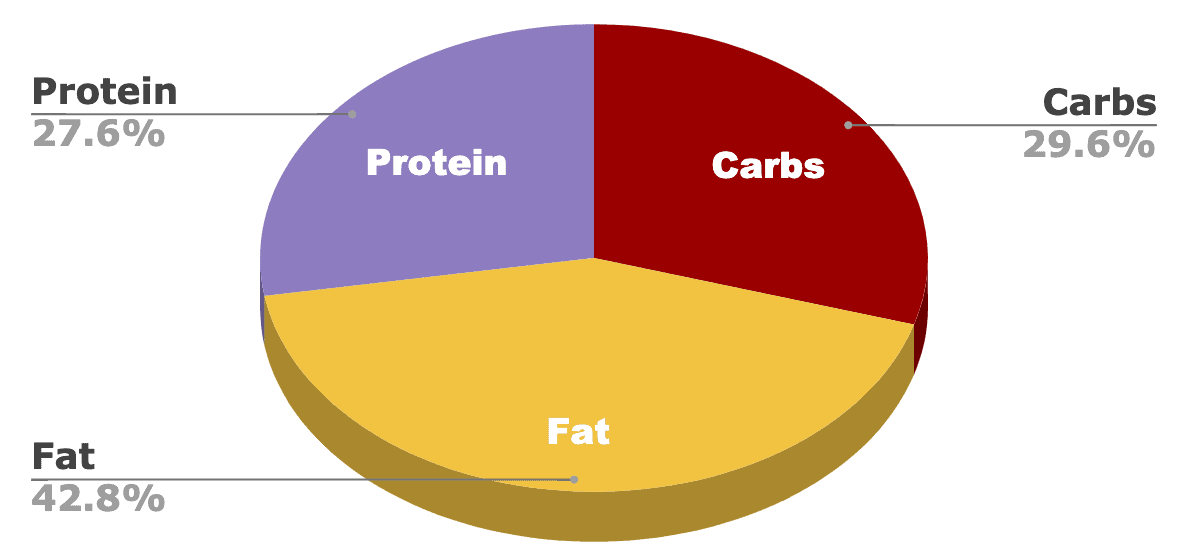
Calorie Breakdown:
** We’ve chosen Hill’s Science Diet Hill’s Science Diet Adult Sensitive Stomach & Skin to represent the rest of the products in the line for this review **
Pros
Recipes are created by a team of scientists for optimal nutrition
Strict quality control of ingredients ensures consistent cat food quality
Many formulas to choose from
There are specialty blends for cats with specific needs
Quality protein sources are used
Cons
More expensive than other brands
Some ingredients aren’t our top choices
Recall History
Hill’s has only had a few recalls over the years, including one as recently as 2019.
Early in 2019, dangerously high levels of vitamin D were found in several batches of Hill’s food, prompting a recall. Two results came of this. First, Hill’s strengthened its stringent quality assurance processes. Next, a class-action lawsuit was filed against Hill’s over the high levels of vitamin D.
It’s not a true recall, but in 2015, Hill’s voluntarily recalled some of their dog food varieties over labeling issues. In 2014, 62 bags of Hill’s pet food were recalled in Nevada, California, and Hawaii due to salmonella contamination. Like most pet food brands at the time, Hill’s was also recalled in April 2007 over melamine contamination.
Reviews of the 3 Best HILL’S Science Diet Cat Food Recipes
For dry cat food, Hill’s Sensitive Stomach & Skin formula is pretty expensive. But it also provides some benefits you won’t find in most cat foods. For instance, it’s loaded with vitamin E and omega fatty acids that will help keep your cat’s skin and coat healthy and feeling great.
This food does more than just keep your cat looking great; it also has prebiotic fiber for gut health. Since it’s specifically formulated for cats with sensitive stomachs, this recipe is easy to digest and won’t upset your cat’s tummy. The first ingredient in this food is chicken, ensuring that your cat is getting quality protein sources. And with a minimum of 29% crude protein, you can be sure that they’re getting plenty of protein overall.
Pros
Vitamin E and omega fatty acids for healthy skin and coat
Almost every major ingredient in this food is an animal product, which is perfect for cats. You’ll find chicken, turkey giblets, pork by-products, pork liver, and more. And these ingredients also happen to be pretty appetizing for picky eaters.
Though it’s made with plenty of animal-based protein sources, this recipe still has less protein than other wet cat foods we’ve used. The servings are also pretty large at 5.5 ounces per can. Small and medium-sized cats might not need that much. Still, the quality is excellent, and that’s our main concern.
Pros
Made with high-quality whole-food protein sources
Multiple sources of protein provide a rich amino acid profile
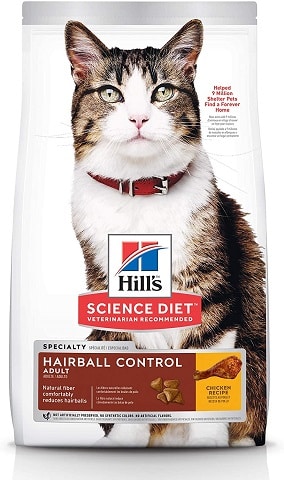
With so many health-boosting blends to choose from, it can be hard to narrow down all the options to a single Hill’s recipe. But with the Multiple Benefit Dry Cat Food, you can get all the benefits you’re looking for in a single blend.
Hairballs are a common complaint for many cat owners. To help with the problem, this blend contains natural fibers that can reduce the number of hairballs your cat coughs up. It’s also formulated to help maintain a healthy weight, so your cat doesn’t become obese.
A quick check of the nutritional panel reveals that this food contains a minimum of 30% crude protein, with chicken listed as the first ingredient. That’s great, but we weren’t so happy with some of the other ingredients, such as corn gluten meal and wheat gluten. However, we did like the antioxidants and vitamins that are included for immune system support.
Pros
Uses natural fibers to reduce hairballs
Helps to maintain a healthy weight
Contains antioxidants and vitamins for immune system support
30% minimum crude protein
Cons
Some of the ingredients aren’t our top choices
What Other Users Are Saying
We’ve shared our opinions on Hill’s cat food, but there are thousands of other users with opinions of their own, and we think it might be helpful to find out what they’re saying as well. To make that happen, we combed through reviews on Amazon and Chewy to find some valuable observations from other perspectives that we’re going to share with you. If you’d like, you can read more reviews about Hill’s cat food here.
A common aspect that we noticed in user reviews is that many cat owners seem to credit Hill’s cat food for helping their cats live long lives. There were also plenty of people that liked what Hill’s food did for their cats’ coats, stools, and overall energy.
Christian started writing for a local newspaper as a teenager, and he's been involved in the publishing industry for most of his adult life. Combining his love of writing with a passion for animals, he is currently the Director of Editorial at Pangolia and the Editor-in-Chief at Catster.
Christian lives in the Philippines with his wife, son, and four rescue cats: Trixie, Chloe, Sparky, and Chopper.
Join the conversation
3 Responses
Thank you for this article about the Hills Science diet cat foods. I have a rescue who was on the Hills kitten dry food and now eats the dry adult Hills dry. She has never eaten wet food of any kind and I feel like she’s not getting all of her nutrients from the dry food. I’ve honestly tried so many wet brands and she turns her nose up to all! Should I be worried or concerned? Thanks.
You do not need to be worried or concerned at all, as Hill's Science Diet adult dry food is legally formulated to be a 100% complete and balanced meal that provides every single nutrient, vitamin, and mineral your rescue cat needs to live a long, healthy life. The only major difference between a dry diet and a wet diet is moisture content, so as long as your cat is drinking plenty of fresh water from her bowl or a cat water fountain, she is getting excellent nutrition. If you wish to continue trying with wet food, you could try some of these methods:
The "Teaspoon" Method: Start by putting just a tiny teaspoon of wet food next to or mixed into their regular dry kibble so they get used to the smell without being overwhelmed by a texture change.
Warm It Up: Microwave the wet food for just a few seconds (make sure it's not hot!) or mix in a splash of warm water. Cats rely heavily on scent, and warming it releases aromas that mimic fresh prey.
Enhance the Aroma: Drizzle a little bit of low-sodium tuna water or pet-safe bone broth over the wet food to make it smell completely irresistible.
Stop Free-Feeding: Move away from leaving dry food out all day. If they are slightly hungry when mealtime rolls around, they will be much more willing to try something new.
Every cat is different, so it usually just takes a bit of experimentation with different textures (like smooth pâté versus shreds in gravy) to find the one they finally accept!
You do not need to be worried or concerned at all, as Hill's Science Diet adult dry food is legally formulated to be a 100% complete and balanced meal that provides every single nutrient, vitamin, and mineral your rescue cat needs to live a long, healthy life. The only major difference between a dry diet and a wet diet is moisture content, so as long as your cat is drinking plenty of fresh water from her bowl or a cat water fountain, she is getting excellent nutrition. If you wish to continue trying with wet food, you could try some of these methods:
The "Teaspoon" Method: Start by putting just a tiny teaspoon of wet food next to or mixed into their regular dry kibble so they get used to the smell without being overwhelmed by a texture change.
Warm It Up: Microwave the wet food for just a few seconds (make sure it's not hot!) or mix in a splash of warm water. Cats rely heavily on scent, and warming it releases aromas that mimic fresh prey.
Enhance the Aroma: Drizzle a little bit of low-sodium tuna water or pet-safe bone broth over the wet food to make it smell completely irresistible.
Stop Free-Feeding: Move away from leaving dry food out all day. If they are slightly hungry when mealtime rolls around, they will be much more willing to try something new.
Every cat is different, so it usually just takes a bit of experimentation with different textures (like smooth pâté versus shreds in gravy) to find the one they finally accept!
Navigating the modern digital landscape requires a sharp eye to distinguish fact from fiction. In this episode of Catster’s podcast, Chatty Cattys, Nicole...
Cats, elegant and beautiful as they are, have some pretty perplexing behaviors. On top of the list is slapping and swatting anything (and anyone) they can get those cute paws on. But why do cats treat everything like a boxing...
As much as we love our cats, the same cannot be said about the tiny sticky hairs always present on clothes, furniture, and bedding. But it is the price we must pay for the comfort, joy, and companionship these little...
Perhaps you’re sitting on the couch with your cat that has wandered over to you for some affection. You oblige and scratch behind your pet’s ears as they lean into your hand. As you stroke your kitty’s back, you feel...
Cat parents know that felines can do some very odd things at times. Whether suddenly running up the walls (literally) or fitting themselves into the smallest space they can find, cats engage in behaviors that seem to have no reasonable...
We love our cats, but if you own an unspayed female cat, as soon as she’s old enough, she will go into heat and you will surely notice some quite evident changes in her. These hormonal changes begin around 4.5...
Laser pointers are popular toys, and it can be fun watching your cat chase after that little red dot. But if you’re wondering whether laser pointers are safe for cats, the short answer is that laser pointers are controversial because...
When people think of pumpkins, they usually think of falling leaves, bonfires, chilly temperatures, and seasonal treats. However, did you know that some cats love pumpkin just as much as their pet parents? While your feline pal might show interest...
If you’re considering when the right time is to say goodbye to your cat if they are in liver failure, you are not alone. Knowing when to say goodbye is a heartbreaking decision for any owner, and it can be...
Stay informed with expert pet care insights delivered straight to your inbox! Discover professional guidance on animal behavior, feeding tips, trusted product picks, and much more.
You may opt-out at any time. View our Privacy Policy for more information.
Sign up for the Catster Email Newsletter
Stay informed with expert pet care insights delivered straight to your inbox! Discover professional guidance on animal behavior, feeding tips, trusted product picks, and much more.
You may opt-out at any time. View our Privacy Policy for more information.















 Review Summary






3 Responses
Thank you for this article about the Hills Science diet cat foods. I have a rescue who was on the Hills kitten dry food and now eats the dry adult Hills dry. She has never eaten wet food of any kind and I feel like she’s not getting all of her nutrients from the dry food. I’ve honestly tried so many wet brands and she turns her nose up to all! Should I be worried or concerned? Thanks.
You do not need to be worried or concerned at all, as Hill's Science Diet adult dry food is legally formulated to be a 100% complete and balanced meal that provides every single nutrient, vitamin, and mineral your rescue cat needs to live a long, healthy life. The only major difference between a dry diet and a wet diet is moisture content, so as long as your cat is drinking plenty of fresh water from her bowl or a cat water fountain, she is getting excellent nutrition. If you wish to continue trying with wet food, you could try some of these methods:
The "Teaspoon" Method: Start by putting just a tiny teaspoon of wet food next to or mixed into their regular dry kibble so they get used to the smell without being overwhelmed by a texture change.
Warm It Up: Microwave the wet food for just a few seconds (make sure it's not hot!) or mix in a splash of warm water. Cats rely heavily on scent, and warming it releases aromas that mimic fresh prey.
Enhance the Aroma: Drizzle a little bit of low-sodium tuna water or pet-safe bone broth over the wet food to make it smell completely irresistible.
Stop Free-Feeding: Move away from leaving dry food out all day. If they are slightly hungry when mealtime rolls around, they will be much more willing to try something new.
Every cat is different, so it usually just takes a bit of experimentation with different textures (like smooth pâté versus shreds in gravy) to find the one they finally accept!
You do not need to be worried or concerned at all, as Hill's Science Diet adult dry food is legally formulated to be a 100% complete and balanced meal that provides every single nutrient, vitamin, and mineral your rescue cat needs to live a long, healthy life. The only major difference between a dry diet and a wet diet is moisture content, so as long as your cat is drinking plenty of fresh water from her bowl or a cat water fountain, she is getting excellent nutrition. If you wish to continue trying with wet food, you could try some of these methods:
The "Teaspoon" Method: Start by putting just a tiny teaspoon of wet food next to or mixed into their regular dry kibble so they get used to the smell without being overwhelmed by a texture change.
Warm It Up: Microwave the wet food for just a few seconds (make sure it's not hot!) or mix in a splash of warm water. Cats rely heavily on scent, and warming it releases aromas that mimic fresh prey.
Enhance the Aroma: Drizzle a little bit of low-sodium tuna water or pet-safe bone broth over the wet food to make it smell completely irresistible.
Stop Free-Feeding: Move away from leaving dry food out all day. If they are slightly hungry when mealtime rolls around, they will be much more willing to try something new.
Every cat is different, so it usually just takes a bit of experimentation with different textures (like smooth pâté versus shreds in gravy) to find the one they finally accept!